LeetCode vs NeetCode vs PracHub (2026 Interview Guide)
Quick Overview
NeetCode vs LeetCode searchers need a verdict. This comparison weighs price, question quality, study structure, and real-company interview questions, then explains when to use LeetCode, NeetCode, or PracHub for 2026 prep.
If you're prepping for a software engineering, data science, or machine learning interview in 2026, you've probably hit "the grind": solve hundreds of generic algorithm problems, memorize patterns, and hope the right one shows up on interview day. That worked well years ago. It works less well now, because more top companies have moved past pure abstract algorithms toward role-specific, company-specific rounds.
This guide compares the three tools most candidates actually use - LeetCode, NeetCode, and PracHub - across technical depth, role coverage, cost, and strategic fit, so you can pick the right one for where you are in your prep and stop wasting weeks on the wrong activity.
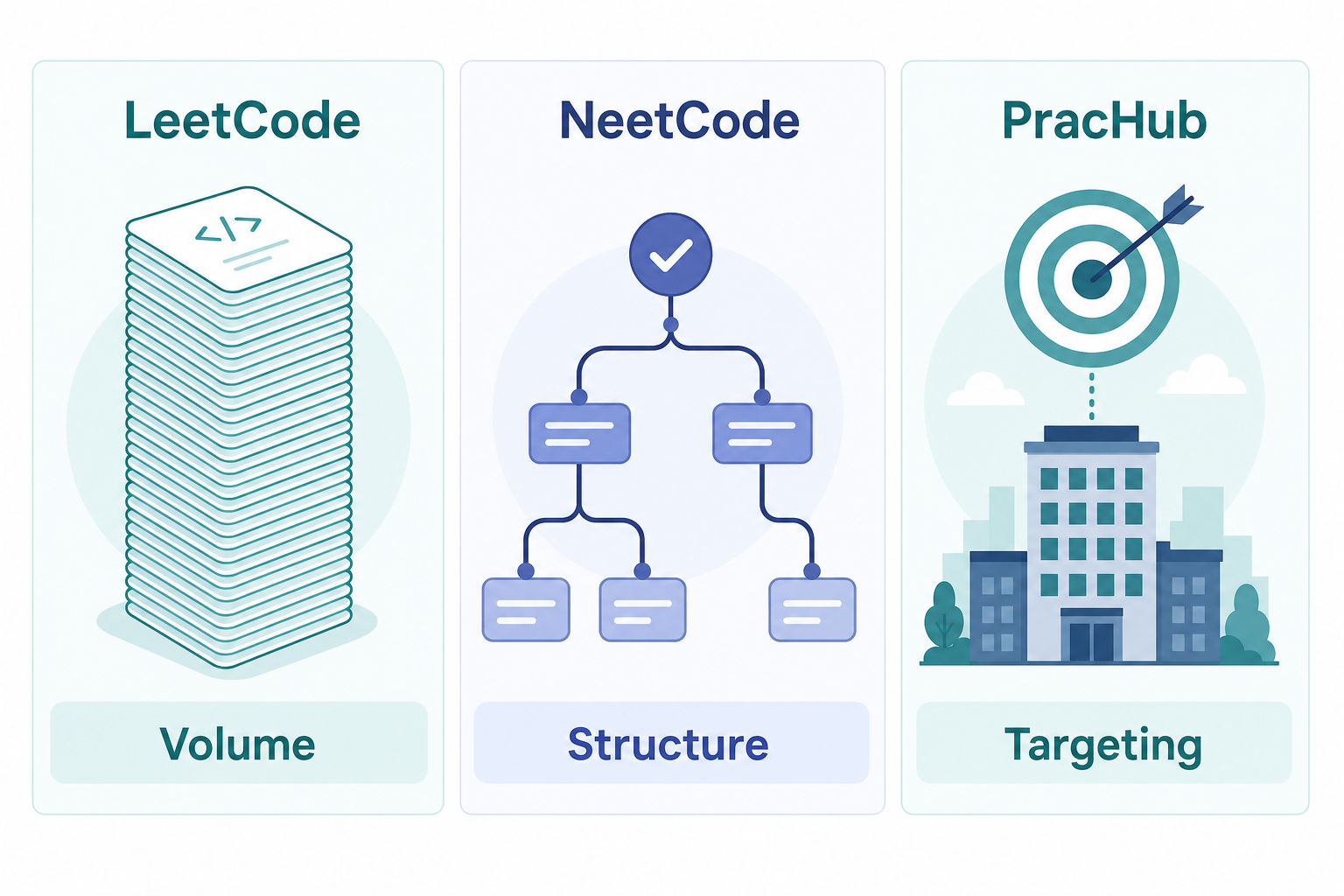
TL;DR: which one is right for you
- Just getting back into shape, no interview booked yet? Start with NeetCode - structured roadmaps rebuild pattern recognition fast.
- You know which company and role you're interviewing for? Switch to PracHub - practice the actual question types that company tends to ask, filtered by your role.
- Hit an unusual algorithmic edge case mid-prep? Keep LeetCode open as a reference library.
They're not mutually exclusive. The strongest candidates use them in sequence, not in competition. The rest of this guide explains why.
1. LeetCode: the algorithm encyclopedia
What it is: LeetCode is the long-standing default for Data Structures and Algorithms (DSA) practice. It hosts thousands of problems and mirrors the format of traditional algorithmic technical screens.
Strengths
- Volume and variety. Nearly every DSA pattern - dynamic programming, graph traversal, sliding window, backtracking - is covered somewhere in the catalog.
- Community and tooling. Discussion threads and an in-browser code runner support many languages, and popular problems have community solutions across multiple approaches.
- Foundational intuition. Grinding LeetCode genuinely builds a feel for time and space complexity, which matters at every company regardless of round format.
Limitations
- The generic trap. LeetCode tests abstract DSA, but several top companies have moved beyond it. Some run debugging-style rounds, some lean on integration-flavored or applied problems, and some emphasize systems-oriented challenges. Pure algorithm drilling won't fully prepare you for those formats.
- Paywalled company filters. Filtering by company requires Premium, and the sets are often dated, incomplete, and skewed heavily toward software engineering. Data scientists, ML engineers, and PMs are largely left without relevant content.
2. NeetCode: the curated DSA curriculum
What it is: NeetCode takes the overwhelming volume of the DSA world and gives it shape, organizing it into dependency-aware roadmaps - most notably the Blind 75, NeetCode 150, and NeetCode 250.
Strengths
- Structured progression. Instead of wandering, you follow a dependency tree: master Arrays and Hashing before Two Pointers, recursion before Trees. The sequencing cuts a lot of wasted study time.
- High-quality video explanations. Its core value is the walkthroughs, which explain the intuition behind an optimal solution rather than just dumping code.
- Efficiency for general screens. If you have a few weeks before a standard technical screen, working a curated list like the NeetCode 150 is one of the highest-ROI activities for general algorithms.
Limitations
- A better map to the same destination. NeetCode is, at its core, a cleaner interface over the same generic problem set. It doesn't solve company-specific or non-DSA preparation.
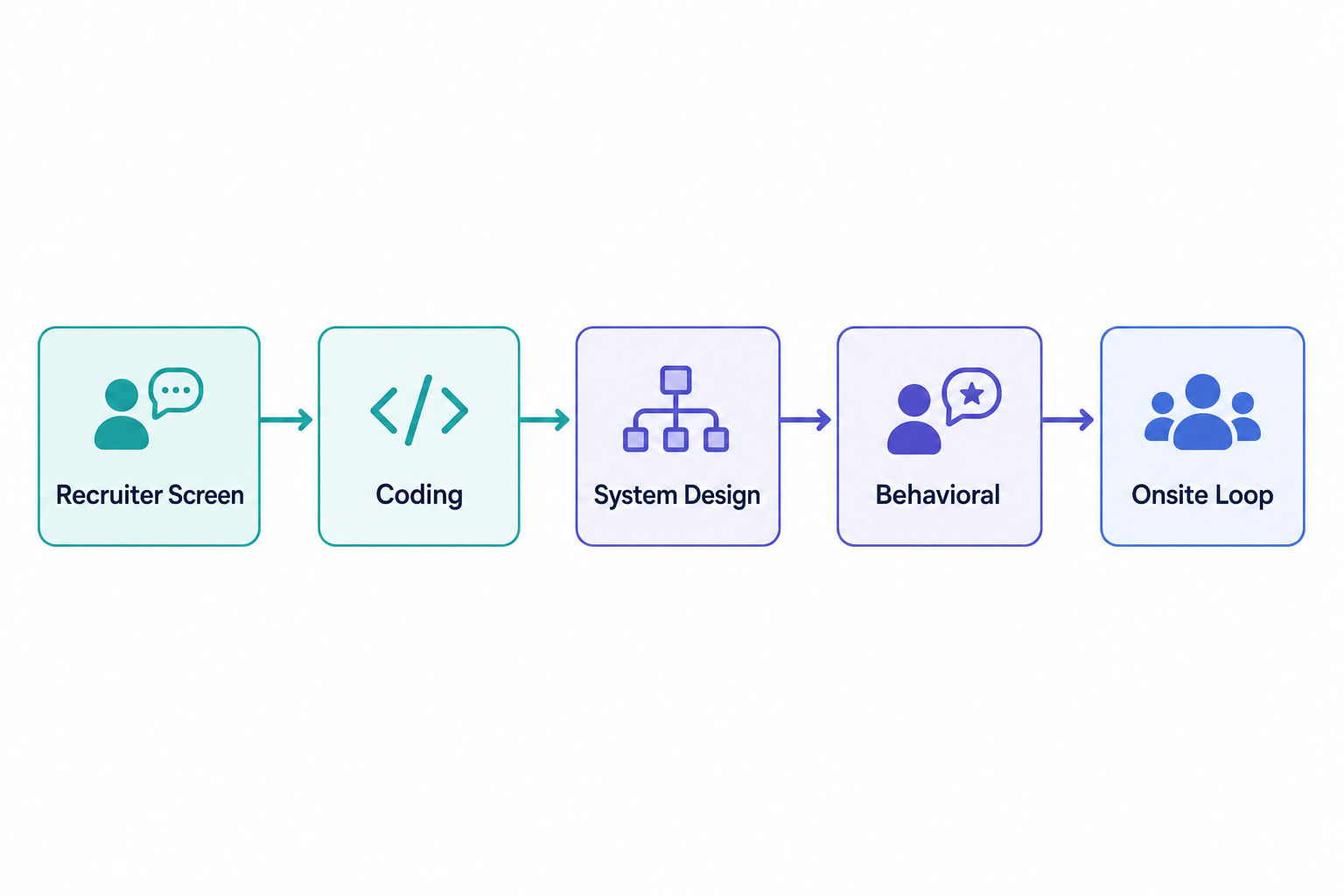
- Thin on system design and behavioral. At larger companies and well-funded startups, the coding round is only part of the loop. System design and behavioral rounds heavily influence your level and offer, and these aren't the focus here.
If you want a feel for the kind of common coding problems these roadmaps drill, this free walkthrough covers a representative spread:
3. PracHub: the company-specific, full-loop platform
What it is: PracHub aggregates real, recently reported interview questions from many top tech companies. Instead of practicing generic concepts in isolation, you practice the format, question types, and difficulty calibration your specific target company tends to use - across the whole loop, not just the coding screen.
Strengths
- Company-specific intel. Targeting a particular company? PracHub surfaces the kinds of questions that company has been reported to ask, so you study the real format instead of guessing. Many questions include context on how that company tends to structure the round.
- Role-specific filtering. This is the clearest separation from the other two. Questions filter not just by company but by role: Software Engineer, Data Scientist (statistics, A/B testing, causal inference), ML Engineer (model architecture, model debugging, applied modeling), and Product Manager. The other ecosystems are built almost entirely for software engineers.
- Full interview loop coverage. Behavioral, system design, code debugging, ML system design, and specialized company-specific rounds. You prepare for the entire loop rather than only the first screen.
- Affordable, with a lifetime option. Monthly and quarterly plans plus a one-time Lifetime Access option, so you can make a single decision and return whenever your next interview cycle begins instead of paying indefinitely.
Limitations
- Not for absolute beginners. PracHub assumes you can already write basic code. It's an interview-intel tool, not an introductory CS course. If you've never written a loop, build fundamentals first.
- No video walkthroughs. It surfaces real questions and reference solutions but doesn't include narrated video tutorials. If you learn best from deeply guided explanations, pair it with a video resource for conceptual gaps.
You can browse the full bank at the PracHub question bank, or jump straight to a company you're targeting - for example Google, OpenAI, or Stripe.
Platform comparison at a glance
| PracHub | NeetCode | LeetCode | |
|---|---|---|---|
| Primary focus | Real company-specific questions | Curated algorithm roadmaps | High-volume generic algorithms |
| Company targeting | Many companies (included) | None | Paywalled (Premium required) |
| Roles supported | SWE, ML, Data Science, PM | SWE / coding only | SWE / coding only |
| Question types | Code, system design, behavioral, ML, debugging | DSA / coding only | DSA / coding only |
| Best for | Targeted prep once you have an interview | Rebuilding pattern recognition | Algorithmic reference + volume |
| Cost model | Monthly / quarterly / lifetime | Free tier + paid roadmaps | Free tier + paid Premium |
How to choose: match the tool to your stage
The mistake most candidates make isn't picking the "wrong" platform - it's using the right platform at the wrong time. Generic algorithm grinding is excellent four weeks out and a poor use of time three days before a specific onsite. Use this rough mapping:
| Your situation | Use this | Why |
|---|---|---|
| No interview booked, rusty on basics | NeetCode roadmap | Fastest way to rebuild pattern recognition in order |
| Strong on DSA, want more volume | LeetCode | Deepest archive of edge cases and variants |
| Interview booked, company + role known | PracHub | Study the actual round formats that company uses |
| Non-SWE role (DS / ML / PM) | PracHub | Role-specific question types the others don't cover |
| Behavioral / system design heavy loop | PracHub | The others under-serve non-coding rounds |
A concrete 3-step sequence
Step 1 - Build the foundation with NeetCode. If you haven't touched a coding problem in months, spend two to three weeks on a curated list to get pattern recognition back.
Step 2 - Switch to PracHub once you have an interview. The moment you know the company, grinding random sliding-window problems becomes the wrong activity. Look up what your target company tends to ask, filter by your role, and rehearse the real rounds - coding, debugging, system design, behavioral, ML.
Step 3 - Keep LeetCode as a reference. When you hit an unfamiliar algorithmic pattern mid-prep, the LeetCode archive is the deepest place to drill that specific case.
The engineers who consistently land offers don't practice more - they practice closer to the target. Know what a company is likely to ask before you walk into the room.
Common mistakes this comparison helps you avoid
- Treating "500 problems solved" as the goal. Coverage of the patterns and the rounds matters more than raw count. A targeted 80 beats an aimless 500.
- Prepping the same way for every role. A data science or ML loop looks nothing like a SWE coding screen. If you're not a SWE, generic DSA lists are only a fraction of what you need - start from role-specific questions.
- Ignoring non-coding rounds until the last minute. Behavioral and system design often decide your level and your offer. Budget real time for them.
- Paying for company filters that are stale. Recency matters; an outdated "company list" can point you at questions that company stopped asking years ago.
For the full library of real, recently reported questions across roles and companies, start at the PracHub question bank, and see other write-ups in PracHub resources and interview guides.
How to Use This Page as a Prep Plan
Do not treat this as passive reading. Convert the ideas in this page into a short weekly loop: learn one idea, practice it under interview conditions, then write down what changed. That is the fastest way to turn advice into visible interview behavior.
| Prep area | What you need to prove | Practice artifact |
|---|---|---|
| Understand | Turn the prompt into a concrete goal. | Clarifying questions and success criteria. |
| Practice | Use realistic constraints and timed reps. | Worked examples with edge cases. |
| Explain | Make reasoning visible. | Tradeoffs, assumptions, and test strategy. |
| Improve | Review misses quickly. | A short feedback log and next action. |
For LeetCode vs NeetCode vs PracHub (2026 Interview Guide), the strongest candidates usually do three things well: they make their assumptions explicit, they use concrete examples instead of vague claims, and they review mistakes quickly enough that the next practice rep is better than the last one.
FAQ
Is NeetCode better than LeetCode?
For most candidates restarting prep, NeetCode is the better starting point because it imposes order on a huge problem set and explains the intuition. LeetCode is the better reference once you need volume or an obscure pattern. They solve different problems, so the honest answer is "use NeetCode to learn, keep LeetCode to look things up."
Do I still need to grind LeetCode in 2026?
Some algorithmic practice is still worth it - coding screens haven't disappeared, and DSA intuition transfers everywhere. What's changed is the diminishing return on generic-only grinding. Once you know your target company and role, time spent on the actual round formats usually pays off more than another 50 random problems.
What makes PracHub different from LeetCode Premium's company filter?
LeetCode's company filter is paywalled, skewed toward software engineering, and can be dated. PracHub focuses on real, recently reported questions across multiple roles (SWE, DS, ML, PM) and the full interview loop - behavioral and system design included - rather than DSA alone. Browse it at the question bank.
Which platform should a data scientist or ML engineer use?
The LeetCode and NeetCode ecosystems are built mostly for software engineers, so DS and ML candidates get limited coverage there. PracHub filters by those roles specifically - statistics and A/B testing for DS, model architecture and debugging for ML. See data science questions and the broader question bank.
Can I just use one platform?
You can, but you'll likely over-index on one dimension. NeetCode alone leaves you thin on company-specific and non-coding rounds; LeetCode alone is generic and SWE-centric; PracHub alone assumes you already have coding fundamentals. The 3-step sequence above gives you each tool's strength where it matters most.
How early should I switch from generic practice to company-specific prep?
A reasonable rule: do generic pattern work until you have a confirmed interview, then pivot to company- and role-specific prep for the final stretch. The closer you get to the date, the more your practice should look like the real rounds you'll actually face.
Comments (0)