What to expect
Meta's Data Scientist, Analytics interview is more product-analytics heavy than the title suggests. You are not walking into a pure modeling loop. This guide breaks down the stages, the question mix, exactly what each round tests, and how to prepare so you spend your prep where it actually moves the needle.
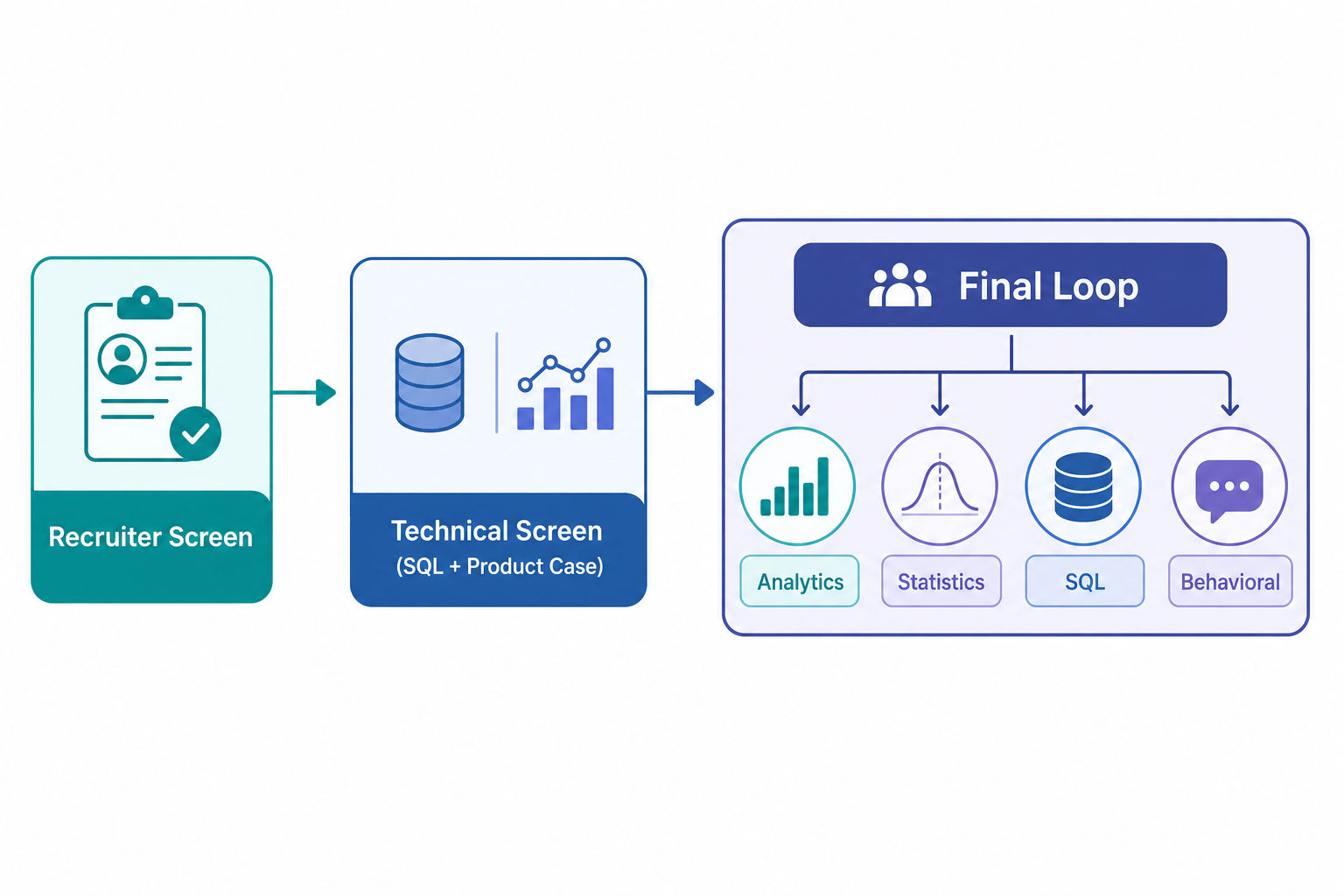
Based on recent candidate reports, the process typically runs in three stages:
- A short recruiter screen.
- A technical screen that mixes SQL with a product or metrics case.
- A final loop with separate interviews for analytical reasoning, statistical execution, and behavioral or leadership topics.
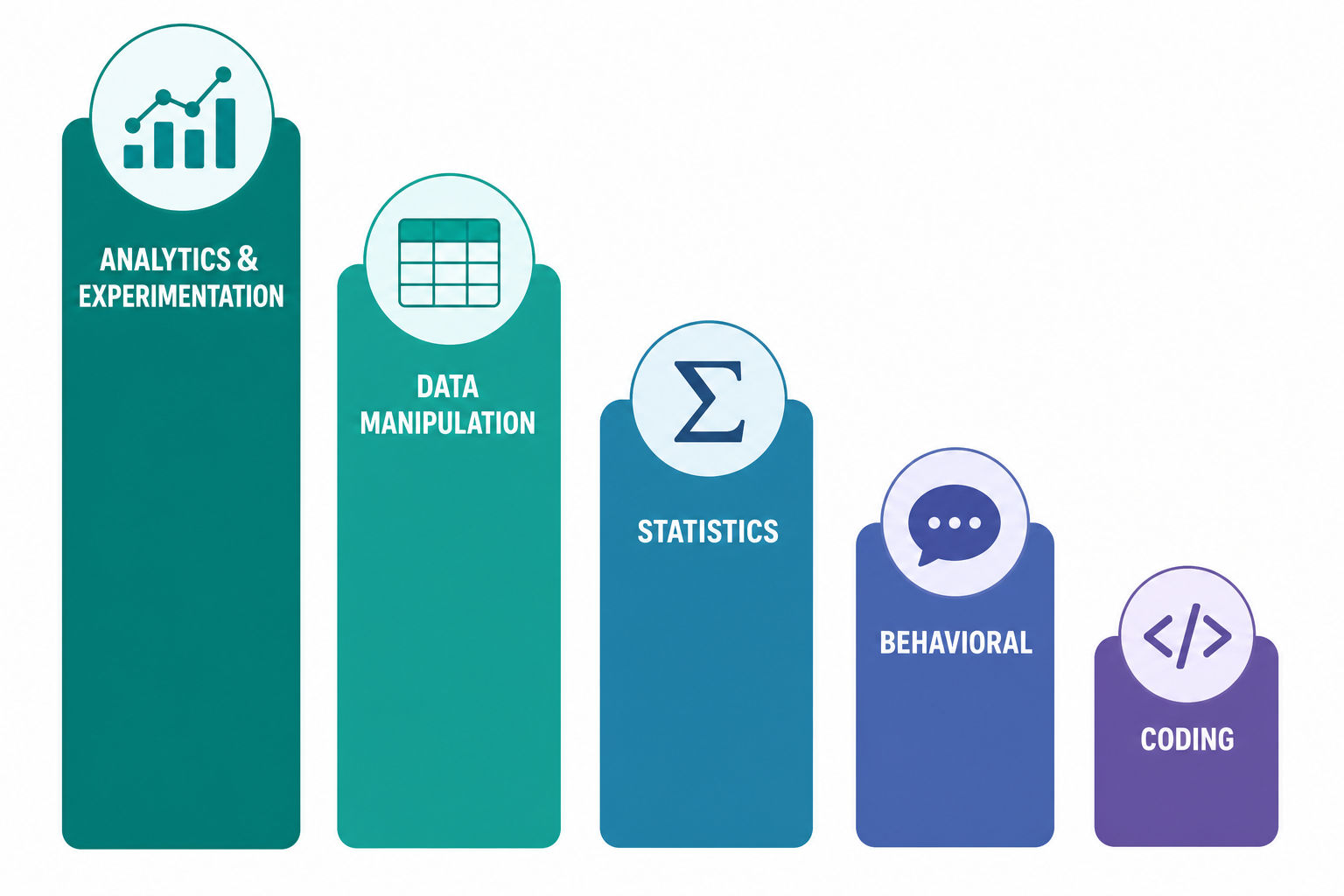
The full loop often spans four to five interviews, with the exact mix depending on team and level. That structure lines up with the question distribution below: across the reported questions on PracHub, the largest bucket is Analytics & Experimentation, followed by Data Manipulation (SQL/Python) and Statistics & Math.
What feels distinctive at Meta is how often interviewers want you to make sound product judgments with incomplete information. You might be asked how to measure a feature launch, why engagement dropped, which metric should lead a dashboard, or how to design an experiment when clean randomization is hard. The loop keeps returning to one question: can you translate messy product problems into measurable decisions, then explain the tradeoffs clearly to product managers and engineers?
The category counts reinforce this. Behavioral & Leadership carries real weight (more than you'd expect for a technical role) because Meta wants people who can influence without hiding behind analysis. Machine Learning appears but is not the center of gravity. Coding & Algorithms is barely present, so preparing as if this were a software-engineering interview will send you in the wrong direction. If your background is more SWE-flavored, the Meta software engineer guide covers that loop instead.
The interview process
The round names below describe a typical loop. The exact sequence varies by team and level, so treat them as a guide rather than a fixed script.
Recruiter screen
A conversation with your recruiter, usually 20–30 minutes. You'll cover your background, team interests, location constraints, and why Meta. It's light technically, but recruiters often probe whether your experience genuinely reads as product analytics, experimentation, or decision support rather than offline research. Expect mostly Behavioral & Leadership topics plus some high-level Analytics & Experimentation discussion.
Technical screen
Roughly 45 minutes, and more targeted than many candidates expect. Reports describe a split between SQL and a product-analytics case, sometimes with conversational A/B testing woven in. You're evaluated on query fluency, metric choice, structured reasoning, and how quickly you move from a vague product prompt to a clean analytical plan. Main categories: Data Manipulation (SQL/Python), Analytics & Experimentation, and some Statistics & Math.
Final loop (onsite)
Often run virtually, this is the round that decides most outcomes. Reports commonly describe three or four interviews: separate sessions for analytical reasoning, statistical execution, and behavioral or leadership, plus sometimes an added SQL-focused interview depending on team and level. These sessions are less about memorized formulas and more about whether you can reason through product ambiguity, defend assumptions, and communicate like a partner to product and engineering. Main categories: Analytics & Experimentation, Statistics & Math, Behavioral & Leadership, plus enough Data Manipulation to confirm you can execute.
The table below maps each round to what's tested and how to prepare for it.
| Round | Length (typical) | Primary focus | Highest-leverage prep |
|---|---|---|---|
| Recruiter screen | 20–30 min | Fit, background, motivation | A crisp "why Meta / why analytics" story; 2–3 impact examples |
| Technical screen | ~45 min | SQL + product case | Live SQL fluency; a metric-definition framework |
| Analytical reasoning | ~45 min | Product sense, metrics | Practice cases on real Meta surfaces |
| Statistical execution | ~45 min | Experiment design, inference | A/B testing depth, reasoning aloud through tradeoffs |
| Behavioral / leadership | ~45 min | Influence, conflict, impact | STAR stories where your analysis changed a decision |
What they test
At its core, Meta is checking whether you can think like a product owner who happens to have data access. Four areas carry most of the weight.
Analytics & Experimentation (the largest category)
Expect questions on north-star and guardrail metrics, launch evaluation, diagnosing metric drops, funnel tradeoffs, retention versus engagement, and experiment design under real-world constraints. A typical prompt is not "what is the formula for X" but something like "Instagram comments are down 8% this week. What would you look at first, and how would you know if it matters?" Interviewers want a framework that moves from metric definition to segmentation to hypothesis generation to a next action.
When two metrics move in opposite directions, naming the tradeoff explicitly is what separates strong answers from average ones. PracHub's walkthrough on what to do when one metric goes up and another goes down is a good drill for this exact pattern.
Data Manipulation (SQL / Python)
Expect joins, aggregations, conditional logic, CTEs, window functions, time-based analysis, and event-level reasoning. The SQL is rarely algorithmically tricky; it's business-data tricky. You need to read a table setup, infer the grain correctly, avoid double counting, and explain your logic while writing. Python can appear, but SQL matters more for this role. Writing a correct query isn't enough at Meta if you can't say what question it answers.
Window functions show up constantly in event-level analysis. If ROW_NUMBER, LAG, and running totals aren't second nature, work through the SQL window functions guide and the broader SQL vs Python in data science interviews breakdown before your screen.
Statistics & Math
This is where Meta checks that your product instincts rest on real quantitative judgment. Be comfortable with A/B testing fundamentals, p-values, confidence intervals, power and sample-size logic, bias and variance, selection effects, metric sensitivity, and probability questions that test intuition over textbook recitation. In the statistical-execution round, candidates are often asked to reason aloud through why a test result might mislead, what happens when assumptions break, or how to interpret noisy movement in a key metric.
Two failure modes come up a lot in reports: selection bias that quietly distorts a result, and p-hacking that manufactures significance. Knowing how to spot both is worth more than memorizing formulas. PracHub's primers on selection bias and the A/B testing experimentation interview cover the reasoning interviewers want to hear. For a sense of how question frequency breaks down across the field, see what tech interview statistics get asked most.
Behavioral & Leadership
This is a substantive part of the loop, not a culture screen tacked on at the end. Meta tends to probe how you handle disagreement with PMs or engineers, how you prioritize when multiple teams want your time, how you influence roadmaps without formal authority, and what decisions you've actually changed with your work.
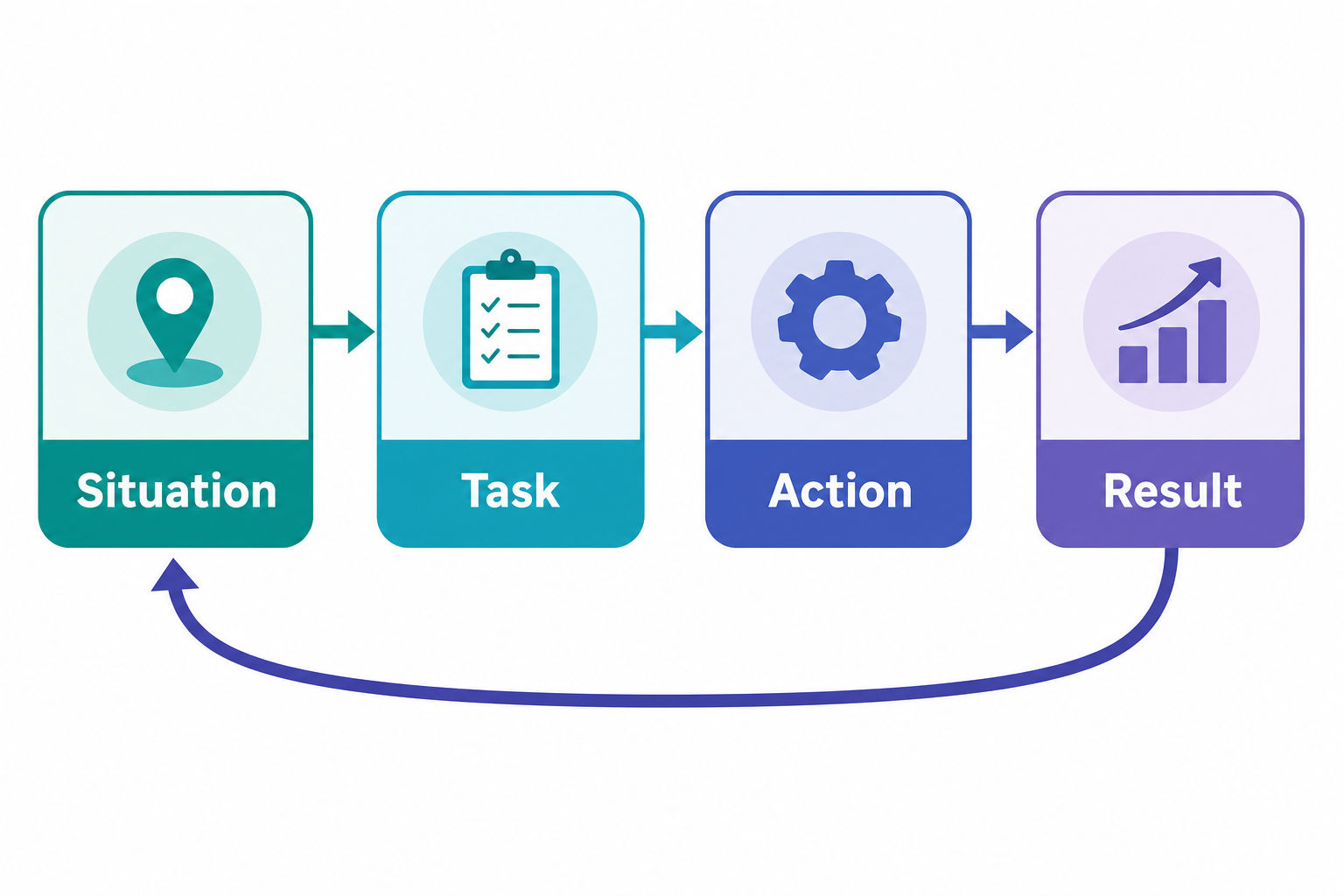
Use a tight STAR structure and lead with the decision your work drove. For instance:
Example answer (STAR): Situation: A launch was about to roll out to all users based on a positive top-line metric. Task: I was asked to confirm the launch was net-positive before the wider rollout. Action: I segmented the result and found the lift was concentrated in one cohort while a smaller, high-value cohort showed worse retention. I brought the segmented view to the PM and proposed a staged rollout with a guardrail. Result: We changed the rollout criteria, protected the at-risk cohort, and still shipped to the segments that benefited.
That framing lands far better than "I built a dashboard and waited for people to notice." For more on the STAR pattern across companies, see the 20 common Meta behavioral questions.
Machine Learning (secondary)
ML usually appears in a practical analytics context unless the team is explicitly ML-heavy: model evaluation, precision and recall, feature tradeoffs, offline versus online metrics, experimentation around ranking or recommendation changes, and how to measure a model's impact on user behavior. For most Meta data-science roles, this sits behind experimentation and product reasoning. Coding & Algorithms is the smallest category. Don't ignore it, but don't grind hard graph problems either; basic scripting fluency is what's expected.
How to prepare and stand out
- Practice product cases on real Meta surfaces. Pick Instagram, Facebook, WhatsApp, Reels, Ads, Groups, or Meta Verified, then define one primary metric, two guardrails, the likely segments, and one experiment.
- Narrate grain first in SQL. Say what each row represents before you write anything. Interviewers care a lot about whether you avoid silent counting mistakes.
- Treat every metric question as a tradeoff question. If you recommend engagement, mention quality. If you recommend growth, mention spam or integrity. Meta products are full of metric tension, and strong answers reflect that.
- Show depth on experiments. Talk about implementation risk, contamination, novelty effects, and why short-term lifts can hurt long-term retention. That reads much closer to real Meta decision-making than reciting generic A/B testing definitions.
- Bring impact stories where your analysis changed a product decision. "I built a dashboard" is weak. "I showed the launch hurt creator retention in one segment, so we changed the rollout criteria" is the kind of story that lands.
- Be concise in behavioral rounds. Give context fast, name the conflict, explain your decision, and close with a measurable outcome. Direct communication is rewarded.
- Lean on cross-functional examples. If you've worked with engineers or PMs under deadline pressure, use those stories. Reports consistently point to leadership and cross-functional influence as a real part of the loop, not a formality.
- Keep ML answers product-facing. Explain how you'd evaluate whether a ranking or recommendation change improved user experience, not just whether offline AUC went up.
Strong vs weak answers at a glance
| Dimension | Weaker answer | Stronger answer |
|---|---|---|
| Metric drop | "I'd check the data" | "I'd confirm it's real, segment by surface and cohort, then form a ranked hypothesis list" |
| SQL | Jumps straight to writing | States the table grain, then writes, then explains what the query answers |
| Experiment | "Run an A/B test" | Names the unit of randomization, guardrails, novelty/contamination risk, and the decision rule |
| Behavioral | "I built a dashboard" | "My analysis changed the rollout decision; here's the measurable outcome" |
| Metric choice | Picks one metric | Picks a primary metric and names the guardrail it could harm |
Practice with real questions
The fastest way to calibrate is to work through real reported questions for this exact role. Browse Meta interview questions, filter to data scientist questions, or compare loops against the Google Data Scientist guide and other interview guides. For broad practice across categories, the full question bank is the place to drill.
How to Use This Page as a Prep Plan
Do not treat this as passive reading. Convert the ideas in this page into a short weekly loop: learn one idea, practice it under interview conditions, then write down what changed. That is the fastest way to turn advice into visible interview behavior.
| Prep area | What you need to prove | Practice artifact |
|---|---|---|
| Metric framing | Define the unit, window, and denominator. | One clear metric contract. |
| SQL execution | Use readable CTEs and test row counts. | A query with checks after each join. |
| Statistics | Connect methods to decision risk. | Assumptions, confidence, and caveats. |
| Communication | Turn findings into a recommendation. | One concise business interpretation. |
For Meta Data Scientist Interview Guide 2026, the strongest candidates usually do three things well: they make their assumptions explicit, they use concrete examples instead of vague claims, and they review mistakes quickly enough that the next practice rep is better than the last one.
FAQ
How many interview rounds does the Meta Data Scientist loop have?
Most candidates report three stages: a recruiter screen, a technical screen, and a final loop. The final loop itself usually contains three or four separate interviews (analytical reasoning, statistical execution, behavioral/leadership, and sometimes an added SQL session). The exact count varies by team and level.
Is the Meta Data Scientist role about machine learning or product analytics?
For the Data Scientist, Analytics track it is primarily product analytics and experimentation. Machine learning appears mostly in a practical, decision-focused way (model evaluation, online vs offline metrics) and is not the center of the loop unless the team is explicitly ML-heavy.
How much SQL do I need for the Meta Data Scientist interview?
Enough to handle joins, aggregations, conditional logic, CTEs, and window functions fluently while explaining your reasoning. The SQL is business-data tricky rather than algorithmically tricky, so the bar is correct grain, no double counting, and clear narration, not exotic syntax.
How important is the behavioral round for a data science role?
More important than candidates expect. Behavioral and cross-functional influence carry real weight because Meta wants people who can change decisions and align stakeholders, not just produce analysis. Prepare STAR stories where your work directly changed a product decision.
How should I answer a "why did this metric drop?" question?
Start by confirming the drop is real (instrumentation, seasonality, reporting window), then segment by surface, platform, and cohort, generate a ranked list of hypotheses, and propose a concrete next action. Interviewers grade the structure and the tradeoff awareness more than a single "right" answer.
How long should I prepare for the Meta Data Scientist interview?
It depends on your starting point, but most candidates benefit from a few focused weeks: product-case reps on real Meta surfaces, live SQL practice, and a polished set of behavioral stories. Spreading practice across the four core areas beats grinding any single one.
Key takeaways
- Prepare for product analytics and experimentation first, statistics second, and SQL execution as table stakes, not for an algorithms grind.
- Strong answers translate ambiguous product problems into measurable decisions and name the tradeoffs out loud.
- Behavioral and cross-functional influence carry real weight; have impact stories ready where your work changed a decision.