What this guide covers
This is a practical preparation guide for the OpenAI Machine Learning Engineer (MLE) loop: what each round looks like, what interviewers are actually scoring, and how to prepare so your answers hold up under pressure. It's written for engineers with real ML and production experience who want to convert a recruiter reply into an offer - not a list of trivia to memorize.
OpenAI's MLE process is skills-based and weights applied ML engineering far more than resume prestige or textbook theory. If you can write clean Python, reason about LLM systems at scale, and defend your past work with specifics, this guide will help you show that on demand.
The interview process at a glance
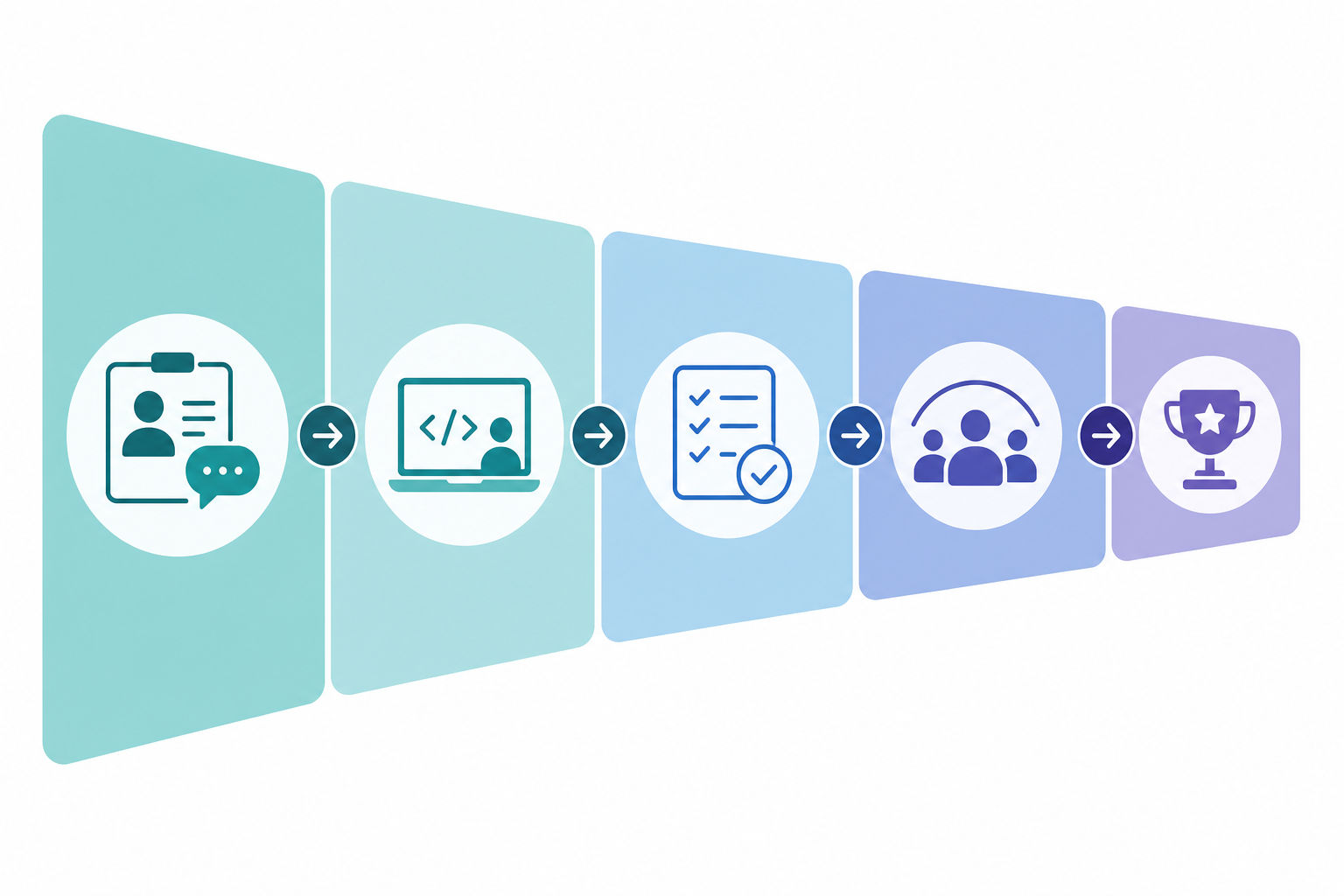
A typical OpenAI MLE path runs through the following stages. Exact stage names, ordering, and counts vary by team, so treat this as the common shape rather than a fixed script.
- Recruiter screen - background, motivation, fit
- Technical or hiring-manager screen - deep walkthrough of something you built
- One or more assessments - live pair coding and/or a take-home
- Final loop - usually 4–6 hours across 4–6 interviewers, over 1–2 days
- Reference check and decision
The final round is generally virtual by default, with an onsite option in San Francisco. Across the loop, OpenAI looks for a specific balance: you need to code well, reason clearly about ML systems, articulate tradeoffs, and show you can turn research-grade ideas into reliable production systems. Compared with a generic ML role, there's more emphasis on LLM systems, evaluation design, deployment tradeoffs, and a high-pressure project discussion where you defend your decisions with specifics.
Round-by-round breakdown
The stages below are the ones candidates most commonly report. Your loop may combine, reorder, or skip some of them.
Recruiter screen
Usually 30–45 minutes by phone or video. Expect questions about your background, why OpenAI, why machine learning engineering specifically, and what ML systems or products you've shipped. The recruiter is gauging mission alignment, communication, role fit, and whether your experience matches the team's needs.
Prep move: have a crisp 60-second "why OpenAI, why this team" answer that names something specific about the product or research direction, not a generic mission statement.
Hiring manager or technical screen
Commonly 45–60 minutes with an engineer or manager. This round centers on a detailed walkthrough of a model, system, or product you built - including failures, metric tradeoffs, and why you chose a particular architecture or training setup. The goal is to see whether you can make sound engineering decisions at scale and explain them clearly.
Coding or pair programming round
Typically 45–60 minutes, live, collaborative, and Python-heavy. The work tends toward practical engineering over trick-based algorithm puzzles: data processing, tensor manipulation, implementing a model utility, debugging, or refactoring. Interviewers look for correctness, code quality, testing instincts, performance awareness, and how well you collaborate while coding.
To rehearse this style of problem, work through real prompts in the PracHub question bank and the OpenAI company page, and review patterns specific to the machine learning engineer role.
Technical assessment or take-home
This varies by team and can range from a few hours to a multi-day assignment. You might build or improve an ML pipeline, analyze model outputs, design an evaluation harness, or implement a training or inference component. The main signals are reproducibility, code structure, experimentation discipline, and how convincingly you present tradeoffs and next steps.
Prep move: write a short README that states assumptions, how to run it, what you'd do with more time, and what you deliberately left out. Reviewers often weight that summary as heavily as the code.
ML system design round
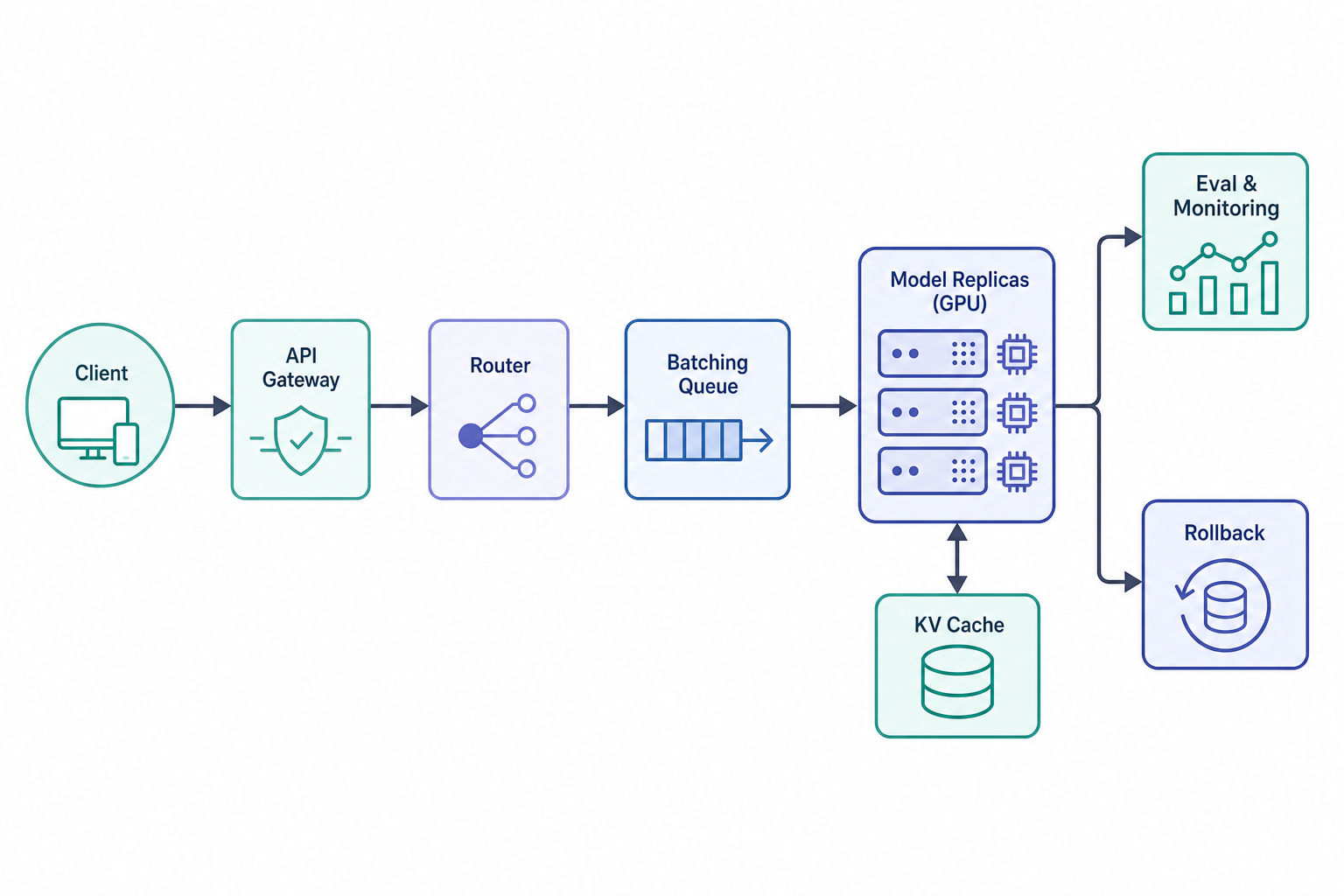
Often around 60 minutes, structured as a collaborative design discussion. Prompts can include designing a large-scale training or inference system, a retrieval or ranking system, or a safe and observable LLM application. Interviewers evaluate architecture choices, scaling judgment, infrastructure awareness, latency and cost reasoning, and how you think about monitoring, rollback, and reliability.
Technical deep dive or project presentation
Usually 45–60 minutes, focused on a project you personally drove (some candidates use slides). Expect pointed follow-ups on what you built, which metrics moved, what failed, what alternatives you considered, and how you'd redesign the system at much larger scale. This round heavily tests ownership, rigor, technical depth, and whether your stated contributions are concrete and defensible.
Behavioral and collaboration rounds
Typically 30–60 minutes each and conversational. You may speak with cross-functional partners or leaders about disagreements, failed experiments, prioritization under uncertainty, and how you raise concerns about quality or safety. The signals here are collaboration, intellectual honesty, resilience, and good judgment in ambiguous situations.
Reference check and final decision
If you advance past the final loop, references may be requested at the decision stage. The full process often spans several weeks, though timelines vary by team and season. Stay in touch with your recruiter and ask directly about expected turnaround so you can plan around competing offers.
What each round is really scoring
It helps to map rounds to the underlying signal so you can prepare the right thing for each one.
| Round | Primary signal | What "strong" looks like |
|---|---|---|
| Recruiter screen | Fit and motivation | Specific, informed reasons for OpenAI and the team; clear comms |
| HM / technical screen | Engineering judgment | A real project explained with tradeoffs, metrics, and failures |
| Pair coding | Practical coding | Correct, tested, readable Python; thinks out loud; handles edge cases |
| Take-home | Experimentation discipline | Reproducible, well-structured, honest about limits and next steps |
| ML system design | Scaling and reliability judgment | Clarifies requirements, reasons about latency/cost, plans monitoring and rollback |
| Deep dive | Ownership and rigor | Concrete contributions, defensible results, redesign-for-10x thinking |
| Behavioral | Collaboration and honesty | Real conflict and failure stories; raises quality/safety concerns well |
What they test, in depth
At a high level, OpenAI tests whether you can bridge ML depth and real software engineering.
Engineering fundamentals
- Strong Python fluency and solid data-structures-and-algorithms basics.
- Clean, testable, maintainable code written under live interview conditions.
- Debugging and root-cause analysis - be ready to explain how you investigated regressions, offline-versus-online metric mismatches, training instability, model failures, or serving issues.
ML and deep learning
- Core ML: supervised learning, optimization, regularization, loss functions, generalization, and evaluation metrics - with the bar set higher on practical application than textbook recitation.
- Deep learning: transformers, attention, embeddings, fine-tuning, and distillation; depending on the team, RL basics or RLHF familiarity can matter.
- LLM work: inference tradeoffs, retrieval-augmented systems, prompt and tool-use pipelines, hallucination analysis, safety guardrails, and evals that combine offline test sets, human review, and online monitoring.
ML systems at scale
Be ready to discuss distributed training, data and embedding pipelines, model serving, observability, latency and cost optimization, reliability, rollout strategies, and rollback plans.
Experimentation quality and judgment
OpenAI also seems to care deeply about experimentation rigor: baselines, ablations, reproducibility, error analysis, metric design, and proving that an apparent improvement is real. Across rounds, interviewers repeatedly probe judgment - what to build first, what to measure, when to ship, and how to trade off speed, quality, cost, and safety.
A worked example: defending a result
The deep dive lives or dies on whether you can back a claim with specifics. Here is the difference between a vague answer and a defensible one.
Weak answer (example): "We switched to a bigger model and quality went up, so we shipped it."
Strong answer (example): "We saw the assistant failing on multi-step reasoning. I built a 300-example eval set from real failure logs, scored it with a rubric plus human review, and confirmed a fixed baseline first. Swapping to the larger model lifted the rubric score, but latency roughly doubled and cost rose, so I ran an ablation: a retrieval step on the smaller model recovered most of the quality gain at a fraction of the latency. We shipped the retrieval version behind a flag, watched online metrics and a guardrail for harmful outputs for two weeks, and kept a one-click rollback. The larger model stayed as a fallback for a narrow high-stakes slice."
The second answer wins because it shows a baseline, an eval, an ablation, a cost/latency tradeoff, a safety check, and a rollback plan. That is the exact shape of reasoning the loop is built to surface.
How to prepare and stand out
- Lead with one strong project. Prepare a single project discussion that demonstrates scale, impact, and personal ownership. Be able to explain the architecture, the exact metrics you moved, the bottlenecks you hit, and what you'd redesign for 10x scale.
- Defend your claims with specifics. Practice handling aggressive follow-ups without going vague. If you claim an improvement, be ready to walk through the baseline, the ablations, the evaluation setup, and how you ruled out false gains.
- Write Python the way you would on the job: structured, readable, tested, and easy to debug. Production-quality code and good collaboration tend to count for more than clever interview tricks.
- Prepare ML system design around modern LLM patterns, not generic web architecture. Be ready to discuss inference serving, batching, latency, retrieval, eval stacks, observability, rollback, and safety controls.
- Bring real failure-analysis stories. Strong examples include debugging model regressions, handling offline/online mismatch, shipping under ambiguity, or catching a quality or safety risk before launch.
- Connect research to engineering. When discussing a model decision, explain both why it worked scientifically and how it affected reliability, cost, maintainability, and product usefulness.
- Know why OpenAI specifically. Be able to speak to the mission, current product direction, safety priorities, and the team area you want in a way that sounds informed and technically grounded.
A do / don't checklist
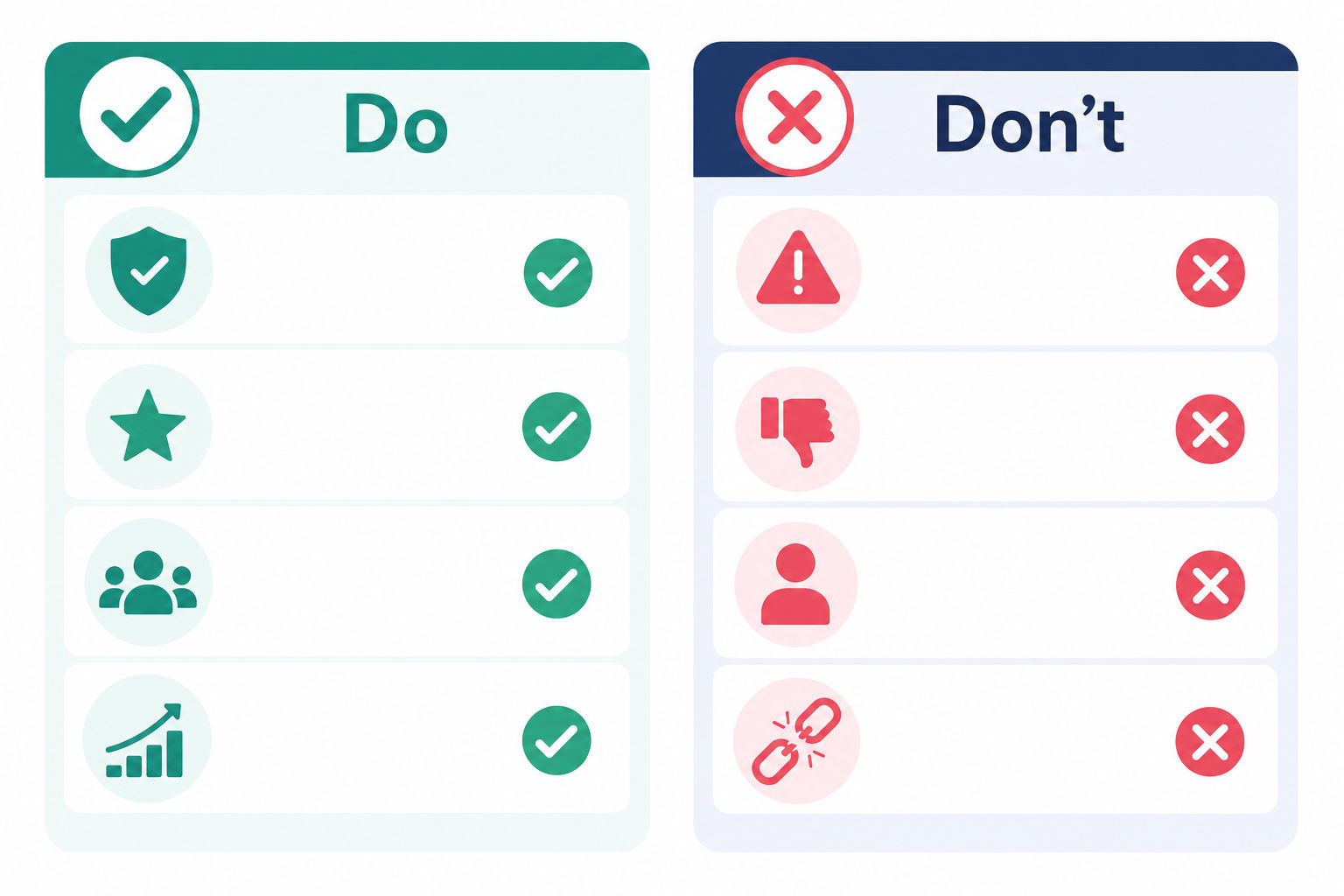
| Do | Don't |
|---|---|
| Quantify your impact (metrics moved, baseline established) | Claim a win with no baseline or eval to back it |
| Think out loud and state assumptions in design rounds | Jump to an architecture before clarifying requirements |
| Bring a project you personally drove end to end | Present team work as solo work - follow-ups will expose it |
| Plan for monitoring, rollback, latency, and cost | Design only the happy path and ignore reliability |
| Admit limits and what you'd do with more time | Bluff on a topic you don't actually know |
Key takeaways
OpenAI's MLE loop rewards engineers who can do the work, not just describe it. Show clean, tested Python; reason about LLM systems at scale; and back every claimed result with baselines and evals you can defend under pressure. The candidates who stand out pair genuine ML depth with production-engineering instincts - and can explain exactly why their decisions held up.
To keep practicing, browse real prompts in the PracHub question bank, study more company-specific patterns in our interview guides, and review additional study resources.
How to Use This Page as a Prep Plan
Do not treat this as passive reading. Convert the ideas in this page into a short weekly loop: learn one idea, practice it under interview conditions, then write down what changed. That is the fastest way to turn advice into visible interview behavior.
| Prep area | What you need to prove | Practice artifact |
|---|---|---|
| Coding fluency | Explain the brute force path, then optimize aloud. | Two timed problems plus a written postmortem. |
| ML fundamentals | Connect concepts to concrete model behavior. | One concept note with examples and failure cases. |
| System design | Discuss data, training, serving, monitoring, and cost. | One diagram with bottlenecks and tradeoffs. |
| Interview execution | Stay calm while clarifying, testing, and revising. | One mock interview and a short feedback log. |
For OpenAI Machine Learning Engineer Interview Guide 2026, the strongest candidates usually do three things well: they make their assumptions explicit, they use concrete examples instead of vague claims, and they review mistakes quickly enough that the next practice rep is better than the last one.
FAQ
How many rounds is the OpenAI MLE interview?
It varies by team, but candidates commonly report a recruiter screen, a technical or hiring-manager screen, one or more assessments, and a final loop of 4–6 interviews over 1–2 days, followed by a decision stage. Some loops combine or skip stages, so confirm your exact sequence with your recruiter.
Is the OpenAI MLE coding round LeetCode-style?
Less than you might expect. The pair-coding round leans practical: data processing, tensor manipulation, implementing a model utility, debugging, or refactoring in Python. Solid data-structures-and-algorithms fundamentals still help, but clean, tested, collaborative code matters more than memorized trick problems.
How much LLM-specific knowledge do I need?
A meaningful amount. Beyond core ML and deep learning, be ready to discuss inference tradeoffs, retrieval-augmented systems, prompt and tool-use pipelines, hallucination analysis, safety guardrails, and evaluation stacks that combine offline test sets, human review, and online monitoring. The depth expected scales with the team you're interviewing for.
What is the single most important thing to prepare?
One strong project you can defend in detail. Expect aggressive follow-ups on what you built, which metrics moved, what failed, what alternatives you considered, and how you'd redesign it at much larger scale. If you can walk through the baseline, evals, ablations, and tradeoffs without going vague, you'll clear the deep dive.
Is the final loop onsite or virtual?
The final round is generally virtual by default, with an onsite option in San Francisco. Ask your recruiter which format applies to your loop and plan your setup (quiet space, screen sharing, a code editor you're fluent in) accordingly.
How long does the whole process take?
It typically spans several weeks end to end, though timelines vary by team and time of year. Keep your recruiter updated on competing deadlines and ask directly about expected turnaround between stages so you can manage timing across offers.