Scale AI Software Engineer Interview Guide 2026: Coding, Systems, and AI Product Sense
Quick Overview
This 2026 Scale AI software engineer interview guide covers the role-dependent process, practical coding, systems design, AI product sense, current Credos, and focused preparation. It shows candidates how to handle changing requirements, design reliable task and evaluation pipelines, measure uncertain model behavior, and practice with real Scale AI questions on PracHub.
A Scale AI coding prompt may begin as a small class or API, then grow while the clock keeps running. New requirements arrive, state becomes harder to manage, and the interviewer watches whether your design stays clear.
Start with real Scale AI software engineer interview questions on PracHub. Attempt one cold, review the written solution, then solve it again after adding a failure case or changed requirement.
Scale does not publish one universal software engineer interview loop. This guide separates current official role expectations from recent candidate-reported patterns, which can vary by team, level, location, and hiring cycle. Your recruiter packet remains the source of truth.
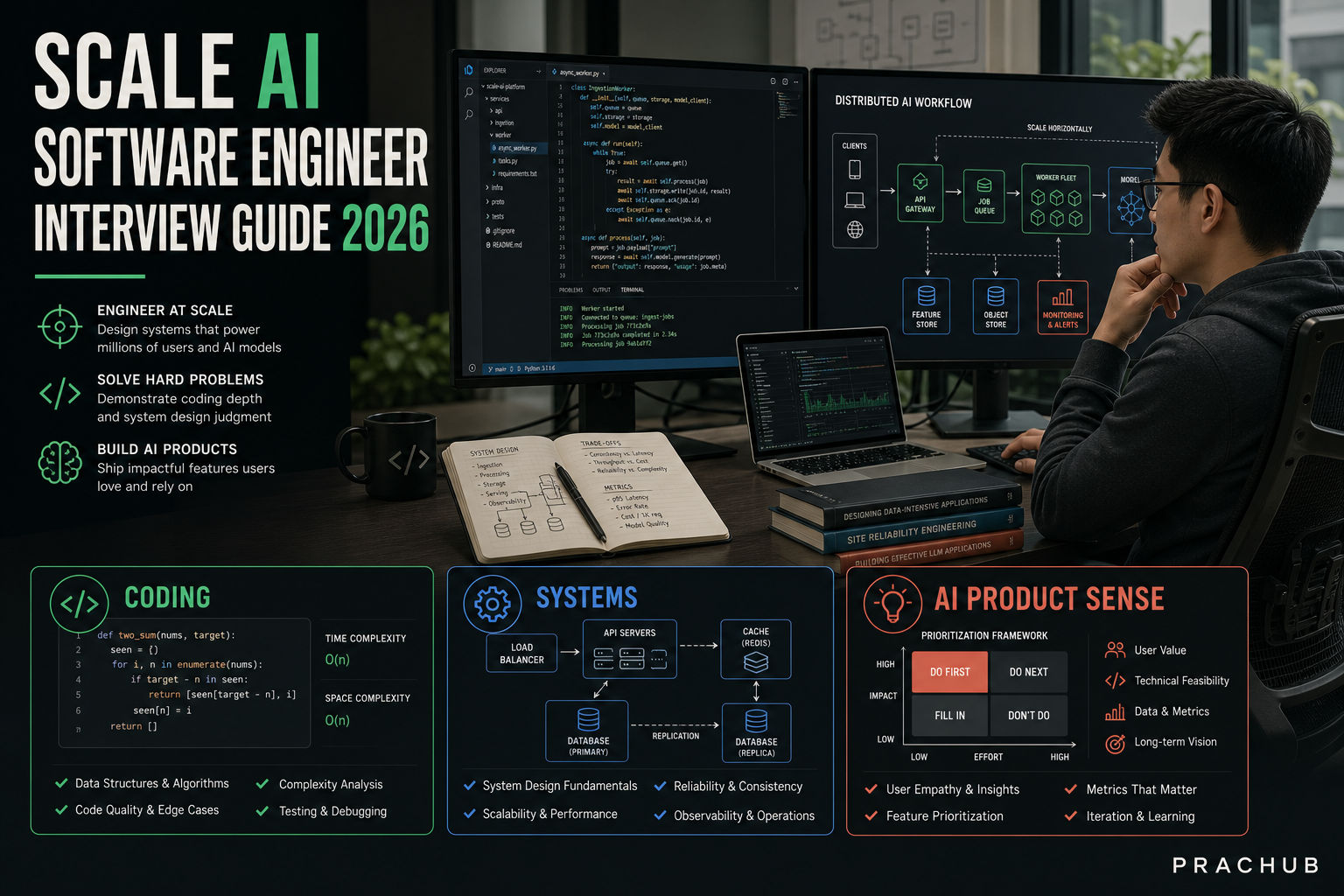
Strong Scale AI preparation connects practical coding, production systems, and measurable AI product decisions.
Quick Verdict: What Does Scale AI Evaluate?
Prepare for four signals: practical coding, systems judgment, AI product sense, and ownership. A current Scale platform role emphasizes distributed systems, cloud infrastructure, orchestration, databases, CI/CD, and independent project ownership. Another current platform role adds APIs, SQL, Kubernetes, LLMs, embeddings, and vector databases.
Recent candidate reports describe different combinations of an assessment or technical screen, progressive coding, debugging, system design, a hiring-manager conversation, and a Credo interview. Do not overfit to one person's sequence.
| Signal | What it can look like | Strong evidence |
|---|---|---|
| Coding | A specification-driven class, API, scheduler, or algorithm | Correct implementation, clear state, tests, and clean extensions |
| Systems | Queues, pipelines, services, storage, reliability, or debugging | Explicit assumptions, failure recovery, and operational metrics |
| AI product sense | LLM integration, evaluation, human review, cost, and latency | A measurable user outcome and a plan for uncertain model behavior |
| Ownership | Project deep dive, manager round, or Credo questions | Personal decisions, impact, learning, and honest trade-offs |
Scale AI Software Engineer Interview Process in 2026
The safest model is a role-dependent funnel. Candidates commonly report an initial conversation or assessment, a technical screen, and a final set of interviews. The final loop may cover practical coding, algorithms, debugging, system design, a project discussion, Credo, or a hiring manager.
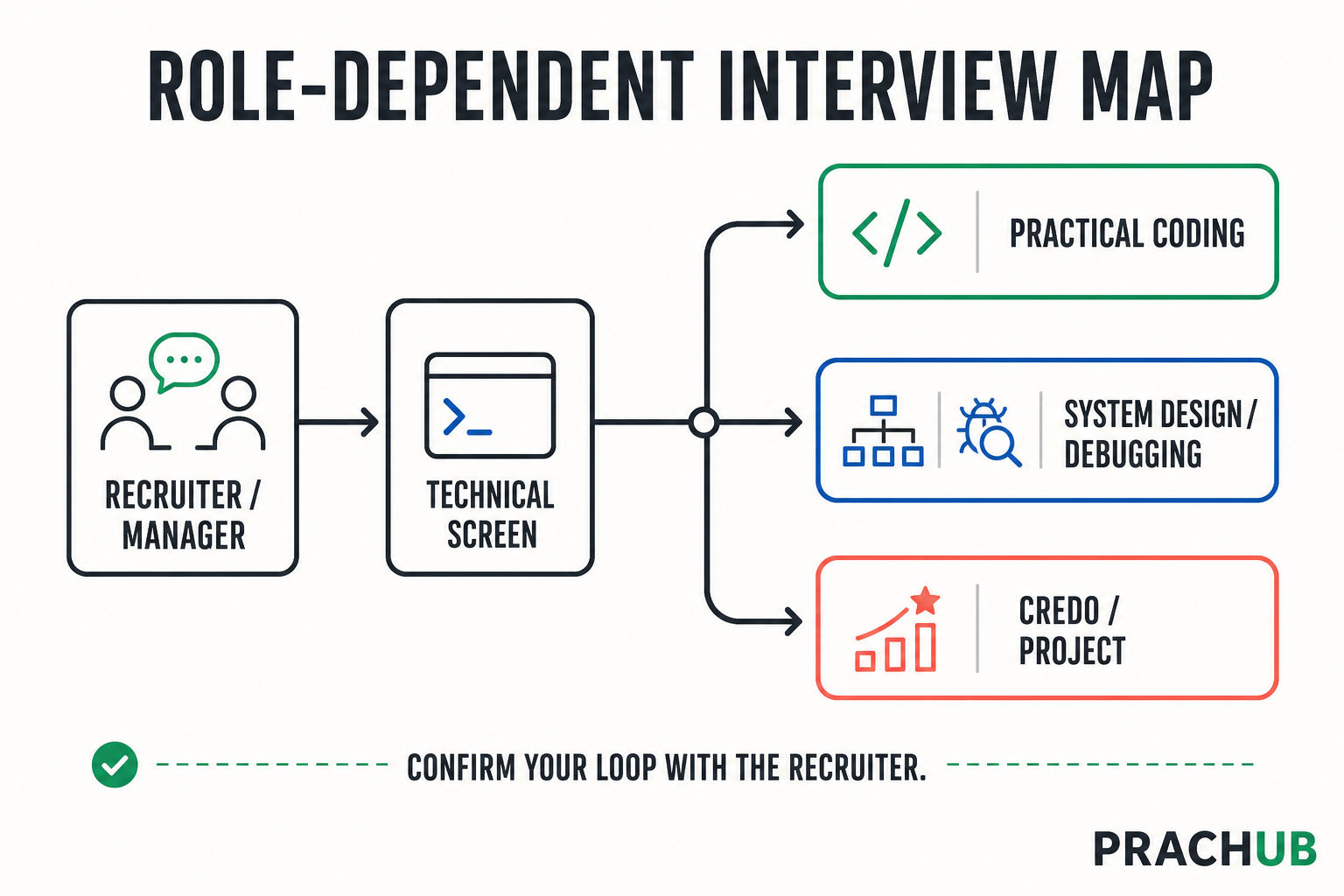
The exact Scale AI loop varies. Confirm each round's goal, duration, tools, and allowed language with your recruiter.
| Possible stage | Likely focus | How to prepare |
|---|---|---|
| Recruiter or manager screen | Role fit, motivation, scope, and communication | Connect your experience to the actual team and product |
| Assessment or technical screen | Algorithms or a progressive implementation problem | Code in small tested steps and narrate requirement changes |
| Technical final rounds | Coding, debugging, systems, APIs, or AI infrastructure | Practice implementation and architecture under time pressure |
| Credo or project round | Judgment, ownership, collaboration, and measurable impact | Prepare evidence-rich stories, not value slogans |
How to Prepare for Scale AI Coding Interviews
Do not treat Scale coding preparation as LeetCode only. Core data structures still matter, but recent reports and PracHub questions also point toward practical, progressive problems where a clean in-memory design becomes more capable over several parts.
A useful example is PracHub's Scale AI streaming job scheduler. The exercise moves from ordering tasks to dependencies, concurrency, leases, retries, and monitoring. That transition is exactly what makes this style harder than a memorized algorithm.
Use a five-step coding rhythm
Clarify, model, implement, test, extend. Restate the contract and ambiguous cases. Name the minimum state you need. Build one complete path, run a normal case and a boundary case, then explain what must change for the follow-up.
Keep complexity visible. If you choose a heap, map, graph, or queue, say what operation it makes efficient and what limitation remains. In practical rounds, maintainable code is part of correctness.
System Design: Reliability and Data Quality Matter Together
Scale's current platform roles mention distributed systems, cloud infrastructure, orchestration, data platforms, APIs, SQL, microservices, and LLM components. Its 2026 SWE Atlas work also emphasizes understanding, testing, and improving real software systems rather than generating code alone.
That suggests a useful design lens: the system must move work reliably and prove that the output is good. For a task or evaluation pipeline, discuss idempotent ingestion, state transitions, retries, worker leases, versioned inputs, quality checks, auditability, and observability.
| Design area | Question to answer | Useful mechanism |
|---|---|---|
| Work lifecycle | What states exist, and who can change them? | Explicit state machine and durable event log |
| Duplicate execution | Can a retry create a second side effect? | Idempotency key, atomic lease, and fence token |
| Data and model quality | How is quality sampled, measured, and improved? | Evaluation set, review queue, and versioned metrics |
| Operations | How will an operator detect and repair failure? | Backlog age, error budget, trace, replay, and runbook |
Practice aloud with PracHub system design questions. Strong Scale-adjacent prompts include a durable task scheduler, an LLM evaluation platform, a human-review workflow, or a multi-tenant inference API.
AI Product Sense for Software Engineers
AI product sense may not appear as a round title. It can surface inside system design, API coding, debugging, or a manager conversation. For a software engineer, it means turning uncertain model behavior into a usable, measurable, and operable product.
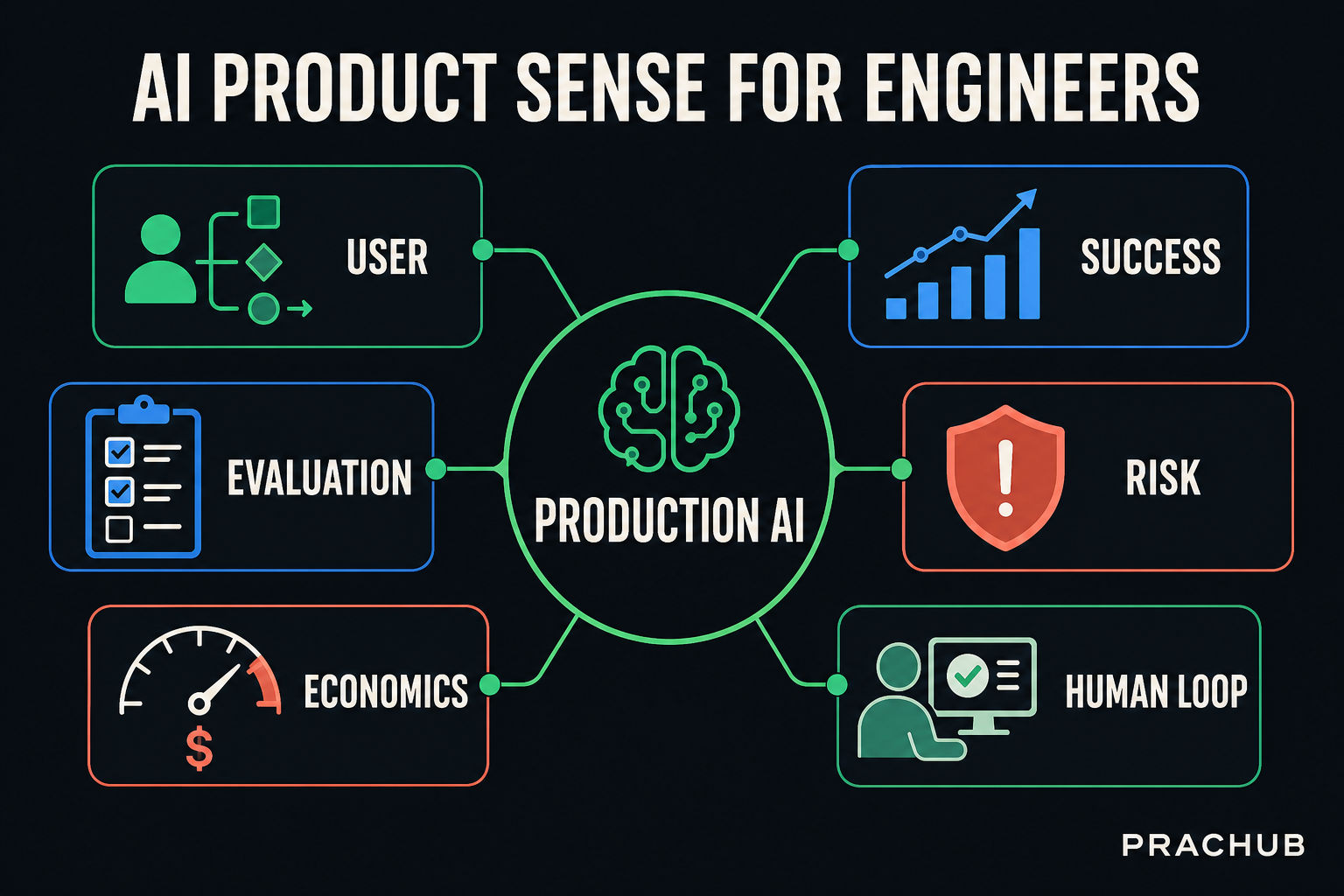
Start with the user decision, then connect data, model behavior, evaluation, safeguards, and economics.
Use a six-question AI product framework
User: What decision or workflow improves? Success: Which outcome metric matters? Evaluation: What offline set and online feedback reveal quality? Risk: Where can the model be wrong or manipulated? Economics: What are the latency and cost budgets? Validation loop: When should a human review, override, or label the result?
For example, an LLM task grader needs more than an API call. Define a rubric, version prompts and models, calibrate human agreement, route uncertain cases for review, monitor drift, and decide what quality gain justifies extra cost. PracHub's Scale AI LLM API pipeline question is a focused way to rehearse this reasoning.
Prepare for the Scale Credo and Project Deep Dive
Scale's current careers page lists six Credos: Earn Customer Love, Team Flow, Quality is Our Cheat Code, Find the 20%, Write the Market, and Three Moves Ahead. The names matter less than the evidence behind your answers.
Choose four stories that show customer impact, a hard prioritization decision, quality under pressure, and collaboration through disagreement. Lead with the outcome, identify your personal decision, quantify the result, and explain what you learned. Rehearse with PracHub's metrics-driven Scale AI project question and behavioral and leadership interview practice.
A Focused 7-Day Scale AI Preparation Plan
| Day | Focus | Deliverable |
|---|---|---|
| 1 | Map the recruiter-provided loop to four signals | One-page round map |
| 2 | Solve two timed coding questions | Tested solutions and error log |
| 3 | Extend one class through three requirement changes | Refactored implementation |
| 4 | Design a durable work or evaluation pipeline | Diagram, API, state model, and failure review |
| 5 | Apply the six-question framework to two AI features | Metrics, risks, costs, and human fallback |
| 6 | Rehearse Credo and project stories | Four concise evidence-rich stories |
| 7 | Run a compressed mock loop | Three corrections to carry into interview day |
Common Scale AI Interview Mistakes
Practicing algorithms without product constraints: A correct heap or graph is only the start. Explain state, validation, tests, concurrency, and what changes when the service becomes distributed.
Adding an LLM without an evaluation plan: Model choice is not product sense. Define quality, uncertainty, review, drift, latency, cost, and rollback.
Memorizing an old Credo list: Scale's public Credos have changed. Use the current careers page and prepare concrete decisions rather than slogans.
Giving team-level impact: Project stories must separate your judgment from the group's work. State the decision you owned, the evidence you used, and the measurable result.
Frequently Asked Questions
Is the Scale AI coding interview LeetCode-style?
Some candidates report algorithmic questions, but others describe practical or progressive implementation. Prepare core data structures, then practice classes, APIs, schedulers, debugging, and requirement changes. The safest strategy is to write correct code quickly without sacrificing structure or tests.
Does every Scale AI software engineer get system design?
No public source confirms one universal loop. System design is more likely for experienced platform, backend, infrastructure, and senior candidates, while early-career loops may emphasize coding and debugging. Ask your recruiter what each scheduled round evaluates.
How much machine learning knowledge does a Scale AI SWE need?
It depends on the team. A general platform role may prioritize distributed systems, cloud, orchestration, and databases, while a GenAI platform role can involve LLMs, embeddings, vector databases, and evaluation. Read the exact job description and prepare the product's failure modes.
What is AI product sense in a software engineering interview?
It is the ability to connect an AI capability to a user workflow, measurable quality, operational constraints, and safe fallback behavior. A strong answer covers evaluation data, uncertainty, human review, latency, cost, observability, and how the feature improves after launch.
How soon can I reapply to Scale AI?
Current Scale engineering postings state a 90-day waiting period before reconsideration for the same role. Policies can change, and a different role may be handled differently, so confirm your specific situation with recruiting.
Final Takeaway
The strongest Scale AI candidate can build the first version, evolve it safely, and explain why the product will work in production. Practice coding under changing requirements, design explicit state and recovery, measure AI quality, and back your Credo answers with real decisions.
Begin with Scale AI software engineer questions on PracHub. Solve one cold, inspect the written solution, then repeat it with one new constraint. That loop develops the adaptability a real interview exposes.
Sources
Related Articles
Codeforces vs LeetCode for Interviews: Competitive Programming or Targeted Prep?
Codeforces vs LeetCode for interviews: compare problem style, difficulty, speed, communication gaps, and the best 2026 prep strategy.
Is Coding Interview University Enough for Technical Interviews in 2026?
Is Coding Interview University enough in 2026? Review its free CS roadmap, time commitment, interview gaps, and the practice you still need.
Interview Cake Review 2026: Is the Coding Interview Course Still Worth It?
Interview Cake review for 2026: current pricing, course strengths, refund terms, limitations, and whether it is still worth buying for coding interviews.
Anduril Software Engineer Interview Guide 2026: Coding, Systems, and Mission Fit
Anduril software engineer interview guide for 2026: prepare for coding, systems design, project depth, role-specific skills, and mission fit.
Comments (0)