
This guide is for data scientists preparing for Shopify's 2026 interview loop. It maps every round you may encounter, breaks down exactly what each stage tests, and gives you a concrete preparation plan for the three things Shopify weighs most: SQL, experimentation, and the distinctive Life Story interview. Use it to stop guessing and start practicing the right things.
What to expect
Shopify's Data Scientist interview stands out for three reasons: a strong emphasis on collaborative technical work, a dedicated Life Story interview, and a heavy product-analytics and experimentation lens. Rather than treating technical rounds as pure speed tests, Shopify tends to evaluate how you reason out loud, ask clarifying questions, and connect analysis to merchant and product outcomes.
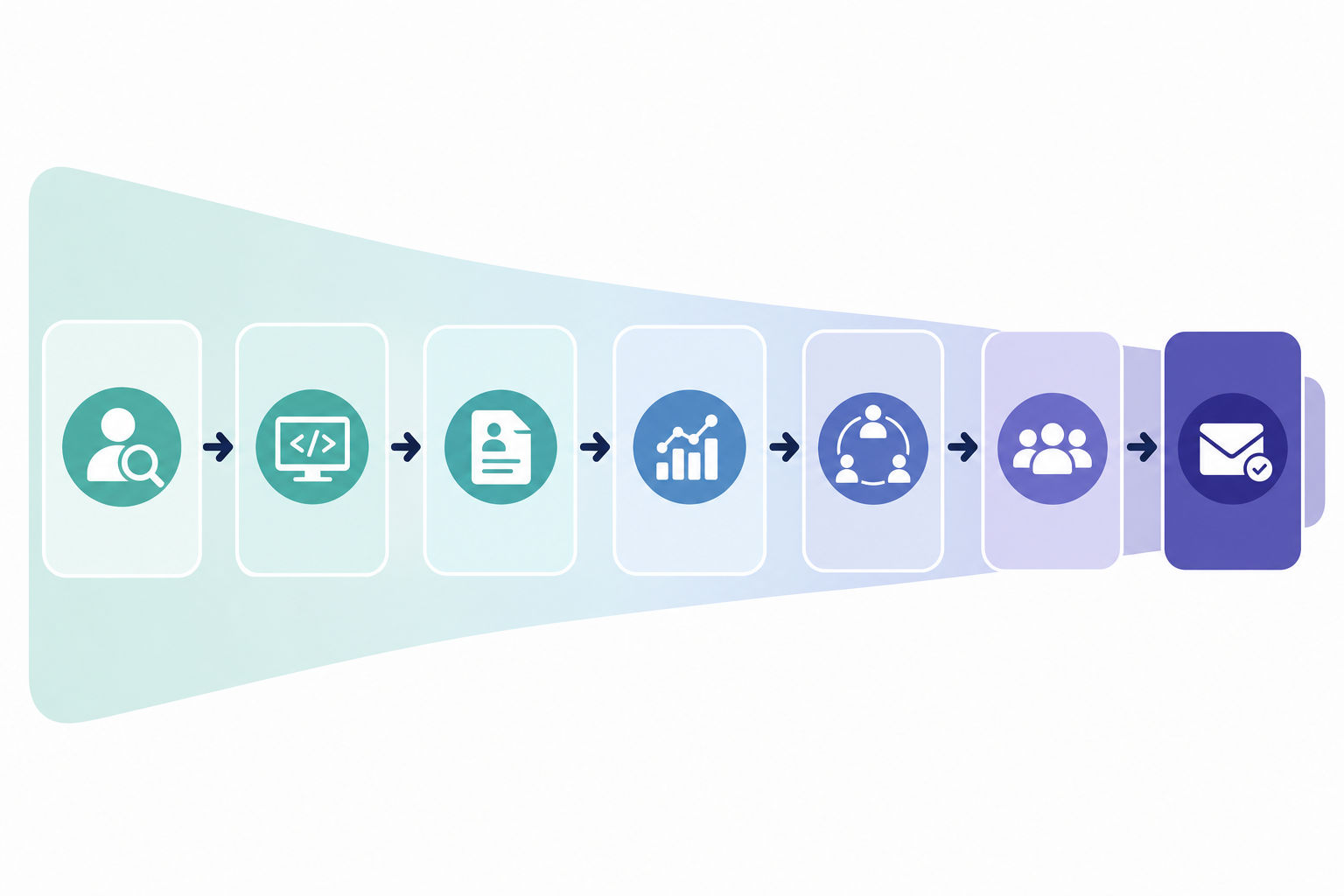
The process typically spans several weeks, though it can run longer when scheduling is slow or team matching is involved. Beyond the initial resume review, most candidates go through several stages: commonly a recruiter screen, one or more technical or pair-coding rounds, the Life Story interview, a product-analytics or experimentation case, and a final loop. Exact round names, ordering, and count vary by team, so treat the list below as the menu of stages you may encounter rather than a fixed sequence.
Want to calibrate against the kinds of questions that come up? Browse Shopify questions on the Shopify company page and Data Scientist questions across companies on the Data Scientist role page.
Interview rounds at a glance
| Round | Typical focus | What they're really checking |
|---|---|---|
| Resume review | End-to-end ownership, business impact | Did you make decisions, not just use tools? |
| Recruiter screen | Motivation, role alignment | Why Shopify, why now, can you communicate |
| Predictive / general assessment | Critical thinking, attention to detail | General problem-solving, not DS theory |
| Technical screen / craft assessment | Live SQL, Python, analysis discussion | How you reason and collaborate live |
| Pair programming | Practical coding or data task | Working with someone, not solo heroics |
| Life Story | Career journey, growth, setbacks | Self-awareness, authenticity, judgment |
| Project deep dive | One or two projects you own | Technical depth and tradeoff thinking |
| Product analytics / experimentation | Metrics, A/B tests, decisions | Product intuition + statistical rigor |
| Final loop | Cross-functional sessions | Collaboration, strategy, communication |
| Team matching | Fit with a specific manager/domain | Alignment before a verbal offer |
Interview rounds in detail
Application and resume review
An asynchronous screen focused on whether your background shows relevant data science scope, end-to-end ownership, and business impact. Shopify also tends to screen early for autonomy, mentorship, and how directly you have influenced product decisions. For this role, your resume needs to show more than tools used. It needs to show decisions made and outcomes delivered.
Recruiter screen
Usually a short phone or video call with a recruiter, and sometimes a hiring manager. Expect questions about your background, why Shopify, why this role, and an example of using data to solve a business problem. The goal is to gauge motivation, communication, role alignment, and whether your experience maps to Shopify's merchant and product challenges.
Predictive / general assessment
A brief online assessment may appear before or around the technical stage. This step leans less on data science theory and more on critical thinking, attention to detail, and general problem-solving. Be ready for a short aptitude-style exercise rather than only a traditional coding test.
Craft assessment / technical screen
This round is often run by a data scientist or other technical interviewer. It may involve live SQL, Python, pair coding, or a technical discussion of analysis, experimentation, and data decisions. Shopify evaluates not just correctness, but how you collaborate live, explain assumptions, and work through ambiguity.
Pair programming / coding exercise
Some candidates get a separate pair-coding round; for others it is folded into the craft assessment. When standalone, it focuses on practical coding or data tasks in a collaborative format. Interviewers look for clear thinking, code structure, edge-case awareness, and your ability to work with another person rather than perform solo under pressure.
Life Story interview
One of Shopify's most recognizable interview steps. It is a reflective conversation about your personal and professional journey: formative experiences, setbacks, growth, and impact. Shopify uses it to assess self-awareness, authenticity, trust, readiness, and the meaning behind your career choices. Prepare for it as a real round, not a warm-up.
Past project / technical deep dive
A discussion centered on one or two projects you know deeply. Be ready to explain the problem, methodology, tradeoffs, stakeholder dynamics, outcomes, and what you would change in hindsight. The round tests technical depth, ownership, judgment, and whether you can connect technical choices to product or business results.
Product analytics / experimentation round
This case-based round asks you to define metrics, design experiments, interpret A/B test results, reason through significance issues, or recommend actions for a product problem. Shopify uses it to evaluate product intuition, statistical reasoning, business judgment, and whether you can turn analysis into decisions.
Final loop
The final stage is typically a set of back-to-back interviews. You may meet data scientists, a manager, engineers, PMs, and other stakeholders in sessions that mix technical depth, product sense, and behavioral discussion. It is designed to test cross-functional collaboration, strategic thinking, communication under ambiguity, and fit for a remote, asynchronous environment.
Team matching
For some candidates, team matching happens after the final interviews and before an offer. These conversations focus on alignment with a specific manager or domain, and timing can vary. Treat it as a genuine evaluation step, since some candidates do not receive a verbal offer until team fit is confirmed.
What they test
Shopify consistently tests practical data science skills rather than isolated trivia, organized around three pillars.
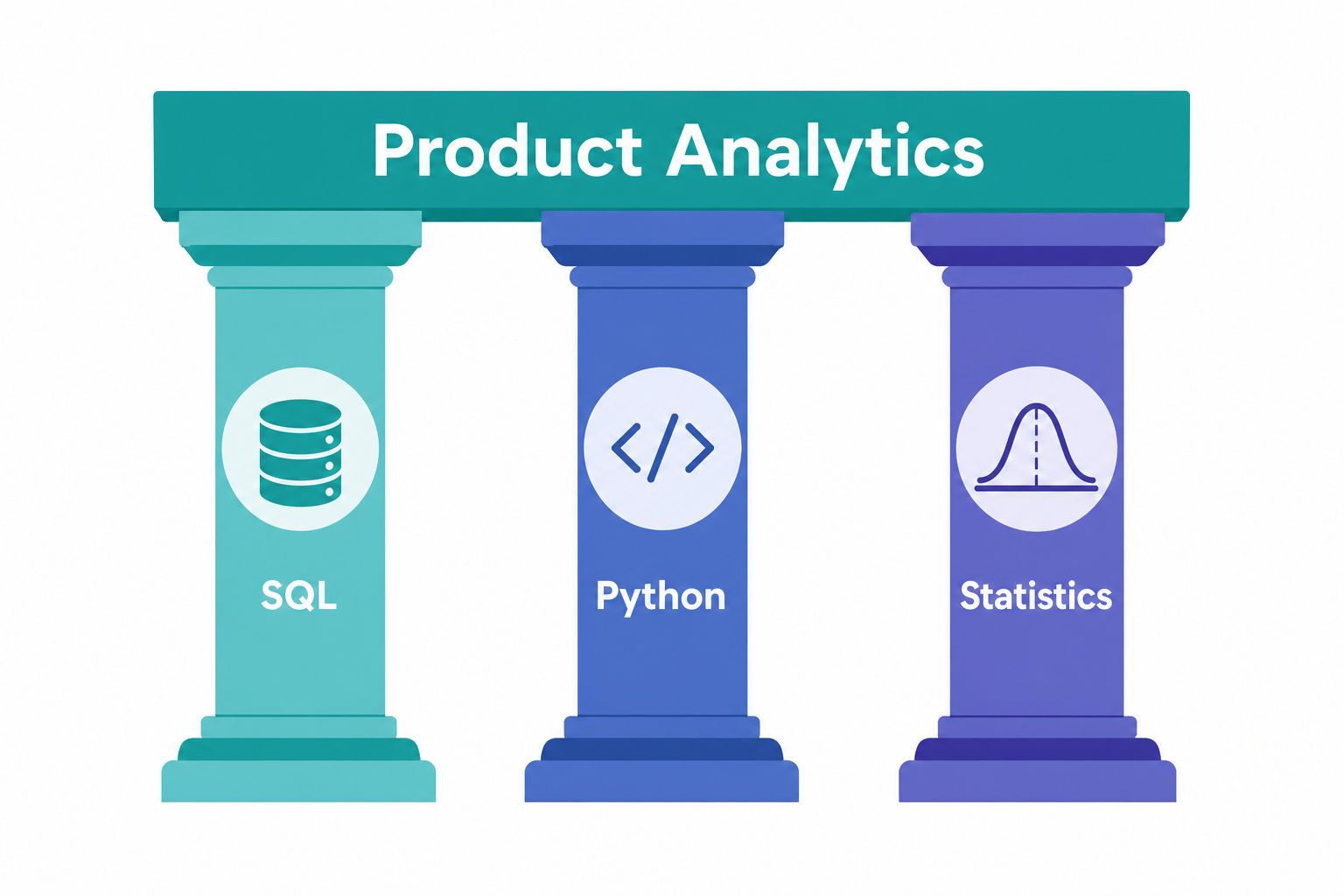
- SQL. Very likely to appear, especially joins, aggregations, CTEs, subqueries, deduplication, funnel logic, retention calculations, and window functions like
ROW_NUMBER,RANK,LAG, andLEAD. Be ready to discuss null handling, assumptions, and how your query would behave at large data volumes. - Python and live coding. The focus is usually data manipulation, scripting, and writing clean, explainable solutions rather than flashy algorithms.
- Statistics and experimentation. Especially important here. Expect hypothesis testing, p-values, power, multiple comparisons, guardrail metrics, sample ratio mismatch, variance reduction methods like CUPED, and what to do when randomization is not feasible.
Product analytics ties these together: you may need to define north-star and guardrail metrics, analyze conversion or retention funnels, segment merchants, forecast growth, or explain how an experiment result should influence a product decision. For some teams, practical ML discussion also appears: feature engineering, model evaluation, recommendation or ranking problems, and production-minded tradeoffs. If you're closer to the modeling side, the Shopify ML Engineer guide covers that loop.
Across every round, Shopify also weighs communication, collaboration, self-awareness, and ownership. Your ability to explain technical work clearly is part of the technical bar.
How to prepare for each pillar
SQL
Practice writing and explaining queries out loud, not just getting the right answer in a silent editor. Drill the patterns that show up most:
- Funnel and conversion analysis (how many sessions reach each step).
- Retention and cohort logic (who came back in week N).
- Deduplication using
ROW_NUMBER() OVER (PARTITION BY ...). - Period-over-period change with
LAG/LEAD.
For instance, a common warm-up is "find each merchant's most recent order." A strong answer reaches for a window function rather than a correlated subquery:
SELECT merchant_id, order_id, order_date
FROM (
 SELECT merchant_id, order_id, order_date,
 ROW_NUMBER() OVER (PARTITION BY merchant_id
 ORDER BY order_date DESC) AS rn
 FROM orders
) t
WHERE rn = 1;
State your assumptions as you go (ties on order_date, NULL handling, time zone) because the interviewer is scoring your reasoning, not just the output. You can rehearse on real prompts in the PracHub question bank.
Statistics and experimentation
This is the highest-leverage area for a Shopify Data Scientist. Make sure you can go beyond "run a t-test and read the p-value."
- Explain what a p-value is and is not, and why a single significant result isn't a green light.
- Reason about power and minimum detectable effect before an experiment starts.
- Catch sample ratio mismatch and explain why it invalidates a test.
- Define guardrail metrics and explain how a win on the primary metric can still be a "no ship."
- Describe variance reduction (such as CUPED) at a conceptual level: use pre-experiment data to reduce noise so you can detect smaller effects.
Example framing for a case prompt: "Checkout conversion is up 0.4% with p = 0.03." A strong candidate asks about sample size, runtime, novelty effects, guardrails (refund rate, support tickets), and whether the lift is practically meaningful, before recommending a ship.
Behavioral and Life Story
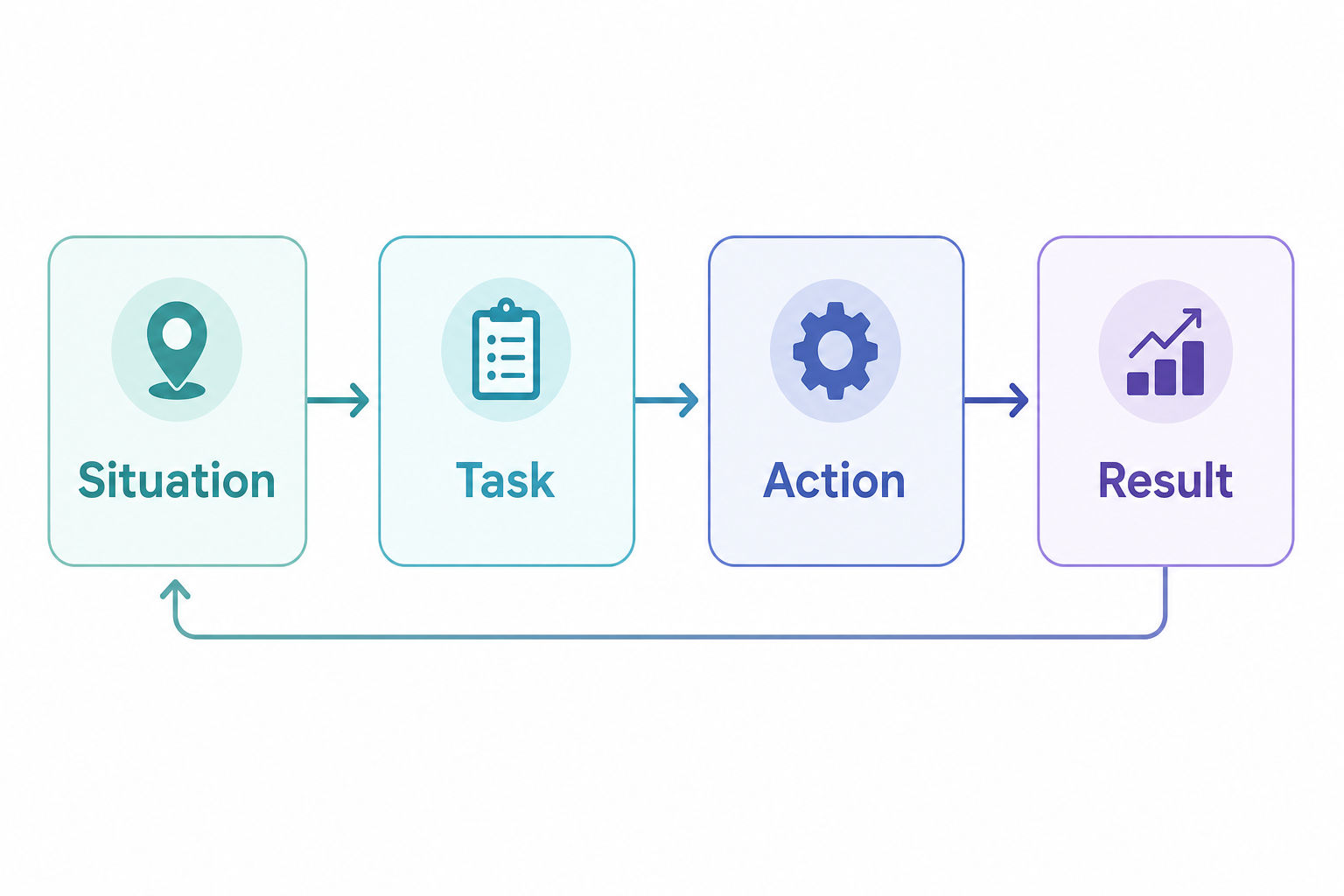
Build a small library of stories using a structured format so you can answer cleanly under pressure. The STAR method keeps each answer scoped: Situation, Task, Action, Result.
For the Life Story specifically, prepare a genuine through-line: the choices you made, what you learned from setbacks, and why this role is the right next step. It rewards authenticity over a polished sales pitch, so practice telling the real version concisely.
How to stand out
| Do | Don't |
|---|---|
| Treat the Life Story as a core round with a real narrative | Wing it as a casual warm-up chat |
| Narrate assumptions and edge cases in SQL/Python | Code in silence and reveal only the final query |
| Tie analysis to merchant outcomes (conversion, retention) | Stay at abstract, decontextualized metrics |
| Discuss power, guardrails, SRM, variance reduction | Stop at "p < 0.05, so ship it" |
| Ask clarifying questions and respond well to hints | Lock into one plan and resist collaboration |
| Show you scoped problems and influenced decisions | Present yourself as a pure analysis executor |
- Treat the Life Story interview as a core round. Build a clear narrative around your choices, failures, growth, and why Shopify is the right next step now.
- Practice SQL aloud, especially window functions, rolling logic, deduplication, and funnel analysis. Reasoning, assumptions, and edge-case handling matter as much as the final query.
- Frame answers in merchant and product terms. Tie analyses to conversion, retention, checkout behavior, recommendations, or decision quality rather than staying at abstract metrics.
- Prepare one or two projects you can defend in depth. Be ready to explain why you chose the method, what tradeoffs you made, how you handled stakeholders, and what changed because of your work.
- Go beyond basic A/B testing. Be able to discuss multiple variants, false positives, power, guardrails, variance reduction, and what you would recommend when results are noisy or imperfect.
- Show collaborative behavior in technical rounds. Ask clarifying questions, narrate your plan, respond well to hints, and make the session feel like working with a teammate.
- Demonstrate autonomy and judgment. Shopify screens for people who did not just execute analyses, but scoped problems, influenced decisions, and operated effectively in ambiguous environments.
A two-week prep sketch
This is one example plan, not a rule. Adjust to your timeline and weak spots.
- Days 1-3: Review SQL window functions and write five funnel/retention queries from scratch, explaining each aloud.
- Days 4-6: Drill experimentation: p-values, power, SRM, guardrails, CUPED at a conceptual level. Work two end-to-end A/B case prompts.
- Days 7-9: Write out two project deep-dive stories and three to five Life Story / behavioral stories in STAR form.
- Days 10-12: Do timed mixed mocks (SQL + a product case) to practice switching context the way a loop demands.
- Days 13-14: Review notes, tighten your "why Shopify" story, and rest before the loop.
Pull practice prompts throughout from the full question bank and other interview guides.
How to Use This Page as a Prep Plan
Do not treat this as passive reading. Convert the ideas in this page into a short weekly loop: learn one idea, practice it under interview conditions, then write down what changed. That is the fastest way to turn advice into visible interview behavior.
| Prep area | What you need to prove | Practice artifact |
|---|---|---|
| Metric framing | Define the unit, window, and denominator. | One clear metric contract. |
| SQL execution | Use readable CTEs and test row counts. | A query with checks after each join. |
| Statistics | Connect methods to decision risk. | Assumptions, confidence, and caveats. |
| Communication | Turn findings into a recommendation. | One concise business interpretation. |
For Shopify Data Scientist Interview Guide 2026, the strongest candidates usually do three things well: they make their assumptions explicit, they use concrete examples instead of vague claims, and they review mistakes quickly enough that the next practice rep is better than the last one.
FAQ
How long is the Shopify Data Scientist interview process?
It commonly spans several weeks from recruiter screen to offer, and can run longer when scheduling, the final loop, or team matching add time. Treat the timeline as variable and stay in touch with your recruiter for current expectations.
What is the Shopify Life Story interview?
It's a reflective conversation about your personal and professional journey: formative experiences, setbacks, growth, and what your choices say about you. It assesses self-awareness, authenticity, and judgment rather than technical skill, so prepare a genuine narrative instead of a rehearsed pitch.
Is SQL or statistics more important for this role?
Both matter, but experimentation and statistics carry a lot of weight for a Data Scientist at Shopify because so much of the work is product analytics and A/B testing. SQL is close behind as the everyday tool for pulling and shaping data. Prepare both, and don't neglect the experimentation depth.
Do I need machine learning for the Data Scientist loop?
For many Data Scientist roles the emphasis is product analytics, experimentation, SQL, and Python rather than heavy modeling. Some teams do explore practical ML (feature engineering, evaluation, ranking/recommendation tradeoffs). If your target is modeling-focused, see the Shopify ML Engineer guide.
How should I practice for the product analytics case?
Practice defining north-star and guardrail metrics, designing a clean experiment, and interpreting results with an eye on power, sample ratio mismatch, and practical significance. End every case with a clear recommendation and the tradeoffs behind it. Run mock cases out loud so you're comfortable reasoning in real time.
What's the best way to use PracHub to prepare?
Start with the Shopify company page and Data Scientist role page to see relevant questions, then drill specifics from the full question bank. Rehearse SQL and case prompts out loud the way you'll be expected to in the live rounds.