What to expect
This guide is for software engineers preparing for a Snowflake interview - backend, platform, distributed-systems, and database-adjacent candidates especially. It walks through the round-by-round shape of the loop, what each stage actually evaluates, the systems-heavy slant that makes Snowflake different from a generic SWE loop, and a concrete prep plan you can start today.
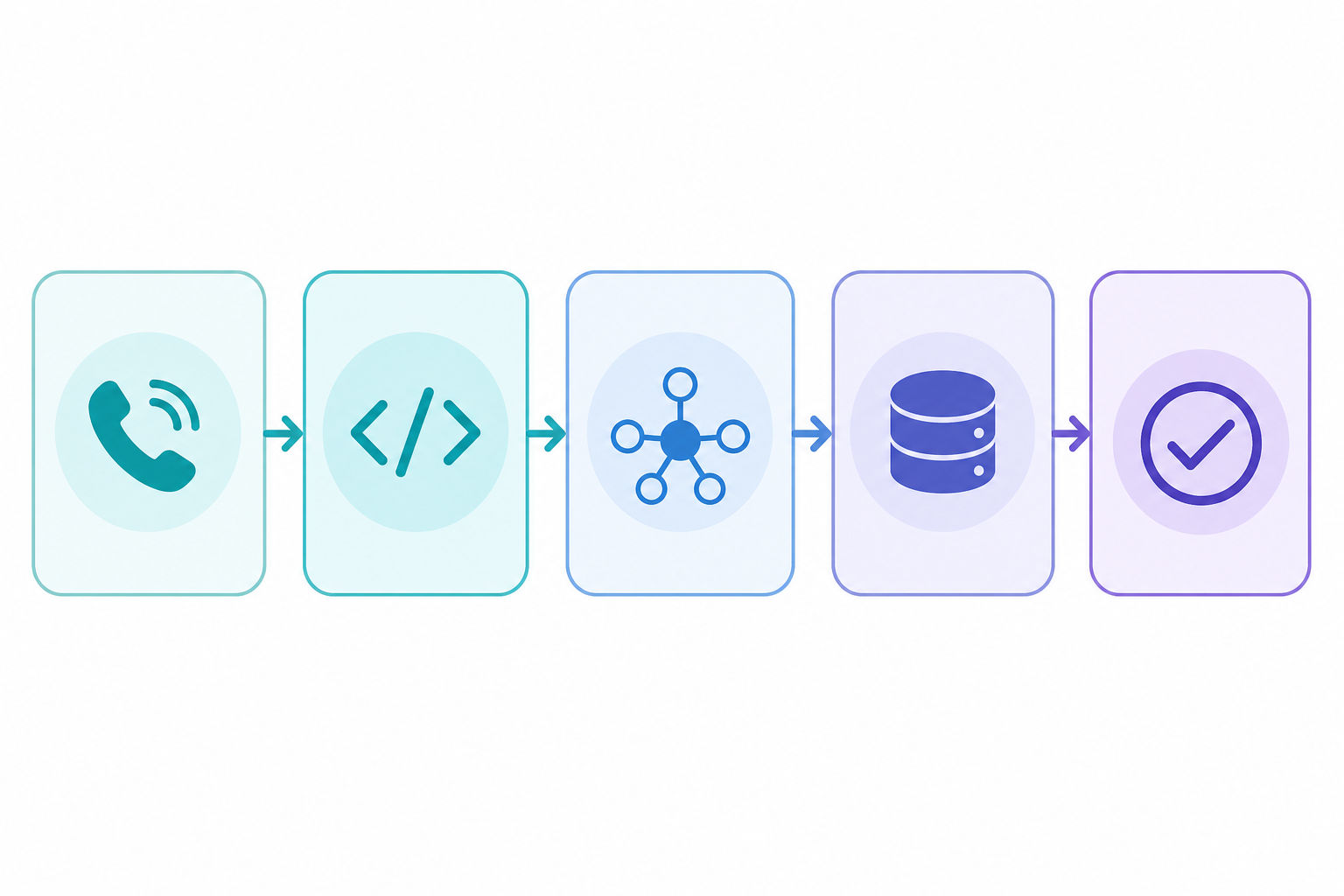
Snowflake's Software Engineer process typically follows a structured path: a recruiter screen, one or two live technical screens, and a final loop that often includes a team-fit or hiring-manager discussion before offer steps. Exact round counts and names vary by team, level, and role, so treat the stages below as a representative shape rather than a fixed script.
What sets Snowflake apart for many candidates is its stronger systems and database flavor. You are evaluated on more than generic coding ability - interviewers care about how you reason about systems, performance, storage, indexing, reliability, and engineering trade-offs. This is especially true for backend, platform, or database-oriented teams. Expect coding rounds with follow-up optimization questions, plus later interviews that may probe distributed systems, logging or audit design, storage choices, and a detailed discussion of your past infrastructure work.
PracHub has 50+ practice questions for this role spanning coding, system design, and behavioral preparation. Start with the Snowflake question bank, and browse the full Software Engineer track for cross-company practice.
Interview rounds
The stages below are common, but not every candidate sees all of them. Senior and backend-heavy loops in particular tend to add the deep dive and presentation rounds.
Recruiter screen
A short call (commonly 25-30 minutes) by phone or video. It checks basic fit for the role and level, your communication, and your interest in Snowflake's work across data, cloud, and infrastructure. Expect questions about your background, why Snowflake, what you've built, and logistics like timeline, location, and compensation.
Technical screen(s)
One or two live coding interviews, typically around 60 minutes each in a shared editor or interview platform. These rounds focus on:
- Problem solving and data structures and algorithms
- Code quality and clean implementation
- Your ability to explain trade-offs while coding and respond to hints or changing constraints
Common topics include trees, graphs, BFS/DFS, topological sort, hash maps, and strings. Depending on role and seniority, you may also see implementation-heavy or OOP-style tasks, or a coding-plus-design combination. A second screen, when present, tends to test consistency and optimization instincts.
Final loop / onsite
The final loop is usually 3 to 5 interviews, held virtually or onsite, and some candidates are asked to attend at least one in-person final interview. It generally combines coding, system design, behavioral assessment, and role-specific technical depth. For backend and senior candidates, this stage is where Snowflake's emphasis on distributed systems, database-adjacent design, and architectural trade-offs shows up most clearly.
Domain deep dive
For senior or backend-heavy roles, you may face a domain expertise round (commonly 45-60 minutes). It digs into the systems you've built, your reasoning about performance and concurrency, and your ability to defend storage, indexing, or execution-engine decisions from first principles. Be ready to explain why you chose one architecture over another and how the system behaved under scale or failure.
Presentation / tech talk
Senior-and-above loops often include a presentation round (commonly around 30 minutes). You present a significant project you led or contributed to, then field follow-up questions about architecture, trade-offs, scaling challenges, failure modes, and impact. This round rewards candidates who can communicate technical ownership clearly, and it differentiates Snowflake from more generic SWE loops.
Behavioral round
The behavioral interview (commonly around 45 minutes) is not a formality. Interviewers look for ownership, collaboration, feedback handling, conflict resolution, customer focus, and alignment with Snowflake's values. Come prepared with concrete examples about receiving criticism, navigating architectural disagreement, end-to-end ownership, and helping teammates improve.
Team-fit / hiring-manager discussion
A team-fit or hiring-manager conversation often comes late in the process (commonly 30-45 minutes). It judges your match with a specific team's needs, scope, working style, and longer-term fit. Expect discussion of the technical problems you want to work on next, your strongest areas, and how you collaborate across engineering and infrastructure partners.
Round-by-round summary
Use this table as a quick map of the loop. The exact composition depends on level and team, but it covers what each stage is built to measure and how to prepare for it.
| Round | Typical length | Primary signal | How to prepare |
|---|---|---|---|
| Recruiter screen | 25-30 min | Role/level fit, motivation, logistics | Crisp "why Snowflake," a one-line summary of your background, salary range ready |
| Technical screen | ~60 min | DSA correctness, code quality, communication | Timed medium/hard problems on trees, graphs, hash maps; narrate as you code |
| Final loop coding | ~60 min | Optimization instincts under follow-ups | Practice "now make it faster / handle this new constraint" variations |
| System design | 45-60 min | Architecture, data models, failure modes | Storage, indexing, partitioning, logging/audit, observability |
| Domain deep dive | 45-60 min | First-principles systems reasoning | One project you can defend at the internals level |
| Presentation | ~30 min | Technical ownership and clarity | A polished story of a system you led, with trade-offs and impact |
| Behavioral | ~45 min | Ownership, collaboration, conflict, feedback | 5-6 STAR stories mapped to Snowflake's values |
What they test
Coding fundamentals - with a twist
Snowflake consistently tests core coding fundamentals, but it tends to push beyond "just solve a LeetCode problem." Be comfortable with medium-to-hard problems involving trees, graphs, BFS/DFS, topological sort, hash maps, strings, and sometimes dynamic programming. Interviewers also care about how you:
- Clarify requirements before writing code
- Write clean, correct code
- Analyze time and space complexity
- Generate test cases and edge cases
- Improve an initial solution under follow-up pressure
For backend-leaning roles, the coding can be more implementation-oriented or object-oriented than purely algorithmic. Work through real prompts in the coding question bank so the format feels routine before the real thing.
Systems thinking
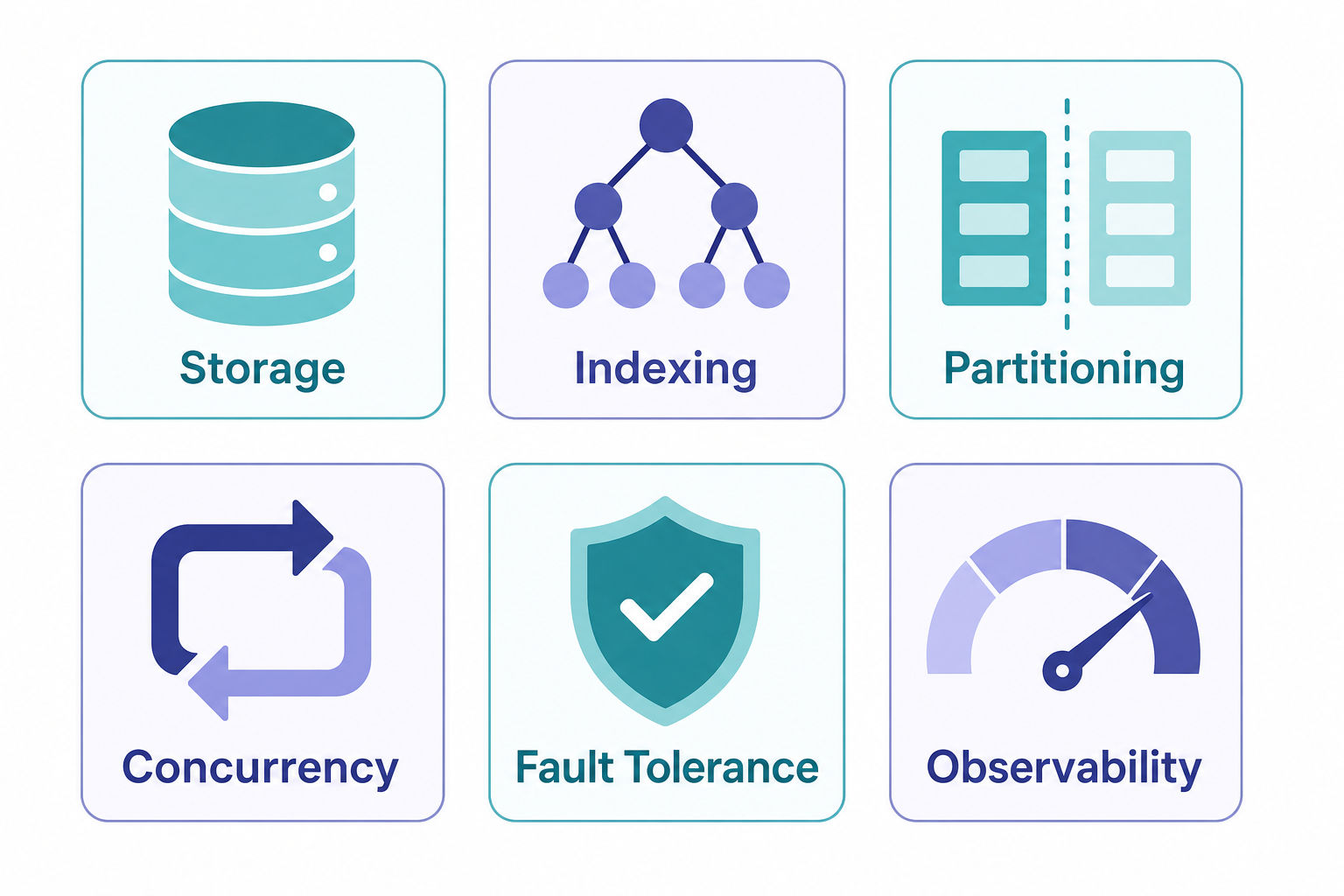
This is what stands out most. For backend, platform, and database-related roles, be ready for questions about distributed systems, indexing, search trees, storage trade-offs, concurrency, memory usage, fault tolerance, and performance. System design prompts can involve backend services, log or audit systems, event pipelines, partitioning strategies, and data access patterns. Senior candidates should also expect deeper discussion of database internals, query efficiency, and reliability. Snowflake tends to reward candidates who move naturally from code-level correctness to architecture-level trade-offs.
Communication
Nearly every round has a communication component. Interviewers evaluate how clearly you explain your reasoning, whether you compare alternative approaches, and whether you can defend engineering choices without sounding rigid.
A note on AI usage: as of 2026, expect interview policies to be explicit about how (and whether) AI tools may be used during the process. Confirm the ground rules with your recruiter, and don't assume the policy from another company carries over. The core evaluation still centers on live coding, design, behavioral judgment, and technical depth.
How to stand out
- Practice solving problems out loud. Walk through requirement clarification, a baseline solution, optimization, complexity analysis, and edge-case testing. Snowflake interviewers judge your reasoning process as much as the final code.
- Build tree and graph fluency, especially BFS/DFS and topological sort. These appear repeatedly and often come with optimization follow-ups.
- Prepare for implementation-heavy coding, not just textbook algorithms - OOP and systems-flavored tasks like building data structures, indexing logic, or class-based designs.
- For backend roles, study indexing, storage layouts, search trees, concurrency, partitioning, and reliability trade-offs. Snowflake probes these areas more than a generalist software company.
- In system design rounds, talk explicitly about data models, access patterns, failure modes, observability, retention, and scalability. Logging, audit, and event-heavy designs are especially relevant.
- Have one strong project deep dive ready. Be able to explain the architecture, bottlenecks, trade-offs, what broke, how you measured success, and what you'd redesign now. This matters even more if you'll face a presentation or expertise round.
- Prepare behavioral stories around ownership, receiving criticism, architectural disagreement, and making teammates better. Snowflake's values point to engineers who pair technical excellence with high standards, collaboration, and accountability.
A 3-week prep plan
You can compress or stretch this depending on your timeline, but the sequence - fundamentals first, then systems, then polish - holds well for a database-flavored loop.
| Week | Focus | Concrete actions |
|---|---|---|
| Week 1 | Coding fundamentals | Daily timed problems on trees, graphs, BFS/DFS, topological sort, hash maps, strings; narrate every solution aloud |
| Week 2 | Systems and design | One system design prompt per day (logging/audit, event pipeline, key-value store); review indexing, partitioning, concurrency basics |
| Week 3 | Polish and mocks | 2-3 full mock loops; finalize your project deep dive; write and rehearse 5-6 STAR behavioral stories |
Throughout, keep one principle in mind: do not stop at the first working solution. Most Snowflake follow-ups push you to optimize, handle a new constraint, or reason about behavior at scale. Practicing the "now make it better" step is what separates a pass from a strong pass.
Do and don't
| Do | Don't |
|---|---|
| Clarify inputs, constraints, and edge cases before coding | Start typing before you understand the problem |
| State complexity and the trade-off you're making | Silently optimize and leave the interviewer guessing |
| Connect code-level choices to system behavior at scale | Treat backend prompts as pure-algorithm puzzles |
| Bring one project you can defend at the internals level | Describe past work only at a surface, resume-bullet level |
| Ask your recruiter about the current AI-usage policy | Assume another company's rules carry over |
| Map behavioral stories to ownership, conflict, feedback | Give vague, "we" answers with no personal action |
How to Use This Page as a Prep Plan
Do not treat this as passive reading. Convert the ideas in this page into a short weekly loop: learn one idea, practice it under interview conditions, then write down what changed. That is the fastest way to turn advice into visible interview behavior.
| Prep area | What you need to prove | Practice artifact |
|---|---|---|
| Understand | Turn the prompt into a concrete goal. | Clarifying questions and success criteria. |
| Practice | Use realistic constraints and timed reps. | Worked examples with edge cases. |
| Explain | Make reasoning visible. | Tradeoffs, assumptions, and test strategy. |
| Improve | Review misses quickly. | A short feedback log and next action. |
For Snowflake Software Engineer Interview Guide 2026, the strongest candidates usually do three things well: they make their assumptions explicit, they use concrete examples instead of vague claims, and they review mistakes quickly enough that the next practice rep is better than the last one.
Video Walkthrough
Snowflake Inc. covers how Snowflake runs its Software Engineer interview, straight from the company.
FAQ
How many rounds does the Snowflake software engineer interview have?
It varies by team and level, but a common shape is a recruiter screen, one or two technical screens, and a final loop of roughly 3 to 5 interviews. Senior and backend-heavy loops often add a domain deep dive and a presentation round. Treat any specific count as approximate and confirm the plan with your recruiter.
Is Snowflake's interview harder than a typical FAANG loop?
It's not necessarily harder, but it's differently weighted. Snowflake leans more on systems, storage, indexing, concurrency, and database-adjacent reasoning than a generic SWE loop, especially for backend and platform roles. If your background is strong on those areas, the slant can work in your favor.
What coding topics should I prioritize?
Trees, graphs, BFS/DFS, and topological sort come up repeatedly, often with optimization follow-ups. Add hash maps, strings, and some dynamic programming. For backend-leaning roles, also practice implementation-heavy and OOP-style tasks like building data structures or indexing logic. You can drill these in the PracHub question bank.
How much system design should a mid-level candidate prepare?
Even at mid-level, expect at least some design discussion, and more if your team is backend or platform focused. Be ready to talk through data models, access patterns, partitioning, failure modes, observability, and retention. Logging, audit, and event-heavy designs are especially relevant to Snowflake's domain.
Can I use AI tools during the interview?
Policies in 2026 are increasingly explicit about this, and they differ by company and sometimes by round. Don't assume - ask your recruiter directly what is and isn't allowed. Regardless of the tooling policy, the core evaluation still centers on live coding, design, behavioral judgment, and technical depth.
Where can I practice real Snowflake-style questions?
Start with the Snowflake question bank for company-specific practice, broaden into the Software Engineer track, and browse other interview guides for adjacent companies to pressure-test your fundamentals across formats.