Business Analyst to Product Manager: Translate Analysis into Product Ownership
Quick Overview
Follow a fictional invoice exception pilot from process map to product decision. Practice translating business analysis into scope, ownership, and follow-up evidence.
A business analyst moving into product management already has a useful starting point: experience finding out where a process fails and what users need. To show product ownership, take one example a step further. Explain which user problem should come first, what the team chose to defer, and how you decided whether the release helped. If somebody else had final authority, say so. Your recommendation and follow-through can demonstrate judgment without rewriting who owned the roadmap.
This guide uses a fictional invoice exception queue to show how a requirements artifact can become a product decision and then a pilot readout. Start with PracHub's competing requirements question and try naming one decision before you read the case. The examples are editorial exercises; no company interview process or candidate report is inferred from them.

Find the product decision inside the analysis
The UK Government business analyst capability framework describes work that includes understanding problems and opportunities, evaluating changes, and defining needs. Its product manager framework describes responsibility for product quality and value, prioritization, and managing outcomes. These are public role definitions for a particular organization, not a universal job split. Both roles can do discovery, influence priorities, and help a team use evidence.
The practical distinction for a transition is often what you are accountable for after the analysis. An analyst can identify an ambiguous process and recommend a change. A PM may also be accountable for choosing that change over competing work, clarifying which outcomes matter, and deciding what to do after rollout. Different teams allocate those responsibilities differently. Ask who can make the decision, how they use recommendations, and what evidence the team expects you to bring after shipping.
Imagine that finance operations processes supplier invoices. Most pass through normally, but some are held because required information is missing. Reviewers open several systems to figure out whether they need a purchase order, an approver, or an updated supplier record. Suppliers often ask for an update because they cannot see the reason for the hold. The initial request is “build a complete exception dashboard.” Your analysis shows that many of the questions begin with one missing piece of information.
That finding changes the question for the team. Which person needs which information, and at what moment? A reviewer needs a reason and a next action. A supplier might need a safe, external explanation. A finance leader wants to know how long the queue stays open. Those are distinct jobs. Trying to solve all of them with one dashboard makes it hard to choose a first release and even harder to tell whether any part of it worked.
Translate each artifact into a decision the team can review
Keep the original analysis. A process map, rules matrix, or user acceptance test is valuable because it gives you something more precise than a recollection. The IIBA BABOK glossary provides a reference for business analysis terminology. The worksheet below is a way to use those artifacts in a product conversation, rather than a rule from the glossary.
| Existing analyst artifact | Product question | Invoice exception case |
|---|---|---|
| Process map | Where does the user lose time or repeat work? | Reviewers stop at the hold and look up the missing requirement in another tool. |
| Requirements or rules matrix | Which cases share a safe, useful behavior? | Known missing-field reasons can show a next step; unknown reasons still go to manual review. |
| Stakeholder notes | Which outcomes are in tension? | Reviewers want fewer lookups; finance wants to preserve approval controls. |
| User acceptance criteria | What must be true at launch and what remains uncertain? | The right reason appears on the right invoice; seeing it does not prove resolution became faster. |
| Release or support log | What would justify scaling, revising, or stopping? | Compare handling time and reopened cases; pause if faster processing comes with unreliable closes. |
A PM recommendation should make one choice inspectable. For example: “Pilot a reason and next action inside the reviewer queue, starting with missing purchase-order information. Defer the external supplier dashboard. Do not change the approval rules.” The recommendation sets a user, a case type, and a boundary. Engineering can challenge feasibility, operations can check terminology, and the finance owner can confirm that the change leaves controls intact.
If your past analyst role stopped at requirements, do not change the verb on your resume to “owned” and assume that closes the gap. Use a true description: “Mapped invoice holds, found repeated reason lookups, and recommended a pilot with reviewers.” To build the next piece of evidence, ask the owner if you can help define the success measure, attend the scope decision, and own the pilot readout. You may discover that a small follow-up assignment is more useful than starting a second analysis project.
Run the pilot against an outcome and a guardrail
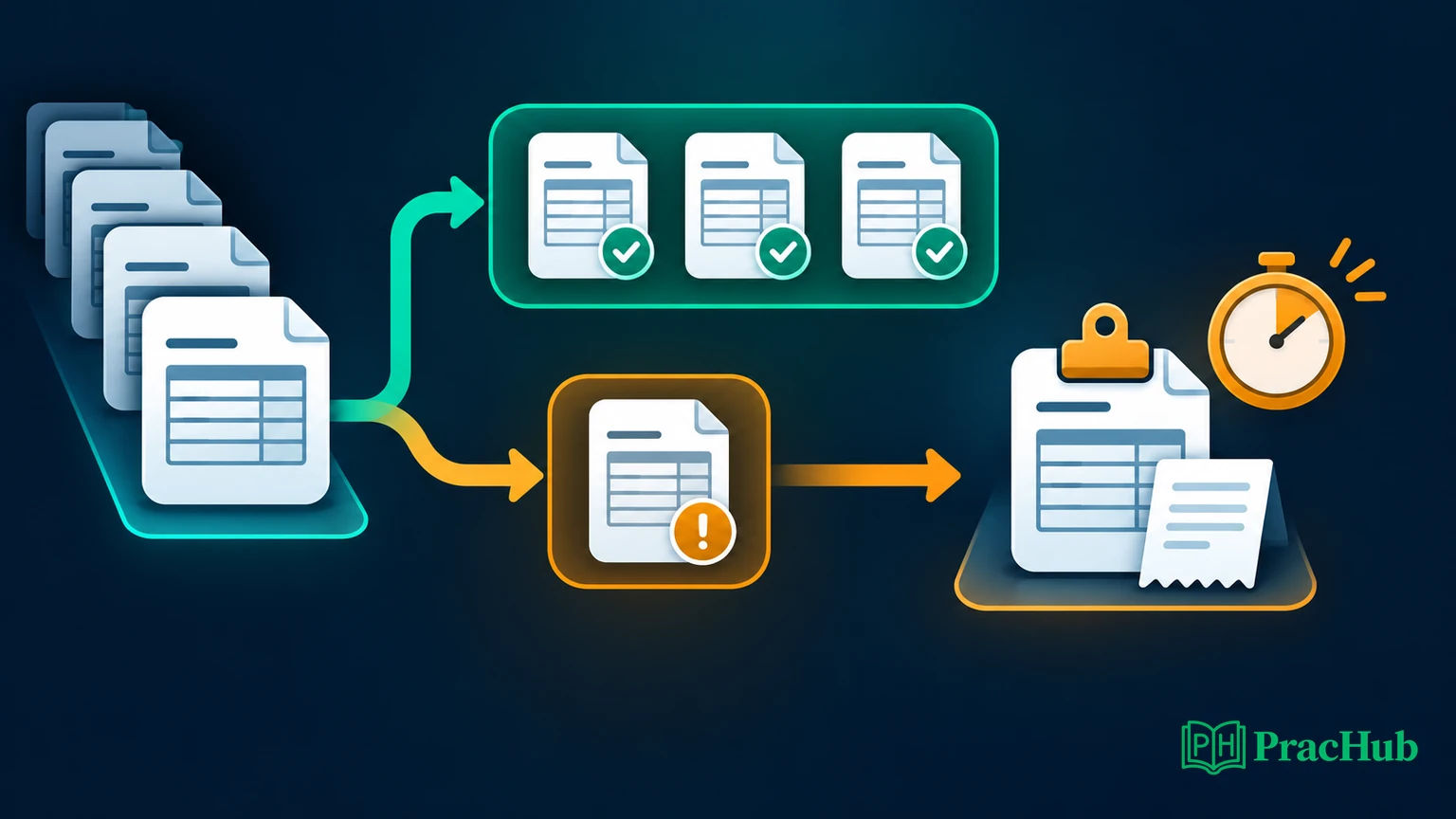
In the fictional case, two comparable operations teams are assigned to run the old and new reviewer queues for the same period. Treat this as a small pilot: staffing and case mix can differ, and two teams do not supply enough independent units for a reliable general causal claim. Before release, define an eligible exception as an invoice held for missing purchase-order information. Start the clock when the hold is recorded and measure which cases reach a valid first resolution within one business day.
Define a reopened case before collecting data. A request marked resolved and reopened within seven days still counts in the guardrail, even if it eventually closes. Give both teams the same seven-day follow-up. Use all eligible cases assigned to each workflow as the denominator for the guardrail, while showing resolved cases separately if the operations team needs to compare only closed cases. That prevents an improvement from looking stronger simply because unresolved cases disappeared from the report.
| Pilot result | Existing queue | Reason and next-action cue |
|---|---|---|
| Eligible invoice holds | 100 | 100 |
| Cases with a first resolution within one business day | 58 | 74 |
| Cases reopened within seven days | 3 | 9 |
| One-day first resolution rate | 58% | 74% |
| Reopened cases per eligible hold | 3% | 9% |
The change yields 16 more cases with a first resolution within one day per 100 eligible holds. Reopens also increase by six per 100. Say that your exercise threshold was no more than two additional reopens per 100, and keep the pilot narrow while you inspect the cases. The totals do not show whether any of the quick resolutions were the same cases later reopened. Check that overlap before discussing fast and durable resolution. A careful PM will explain which conclusion the current table supports and what requires another join.
Inspect a few reasons with operations and finance. If reviewers saw “missing purchase order” when an invoice actually had a different approval problem, tighten the reason mapping and let staff correct it. If the cue simply made it easier to mark a case closed before all work was done, improve the workflow's definition of completion. If the test team handled a different mix of suppliers, compare similar cases before blaming the cue. Record who can authorize reopening the rollout and what evidence they will use.
Keep the acceptance test and the product readout separate. A tester can take an eligible hold, confirm that the cue matches the reason, correct the record, and verify that the unchanged approval step still applies. Repeat with an unknown hold and verify that the old manual route remains available. Those checks can pass even when the pilot shows no reduction in resolution time. Acceptance means the workflow behaves as specified. A readout asks whether that behavior actually made reviewers' work easier without trading speed for repeat work.
Create a short release note for the operators before you expand. Say which hold types are supported, where the reason came from, and what to do if the reason is missing or wrong. Ask one reviewer to use the note without your help. If the note tells staff to skip a step that finance still requires, the release is not ready even if the screen works. That is an example of your existing analyst skill reducing rollout risk: you traced a business rule into a concrete instruction and made the owner explicit.
Tell the transition story without borrowing authority
In an interview, start with the user's work: “Reviewers spent time looking up why invoices were held.” Then say what the analysis changed: “I showed that a common hold type had a repeatable next step, so I recommended piloting one cue instead of building a dashboard for everyone.” Finish by identifying who approved the pilot, what you personally measured, and why the result did or did not justify expansion.
The most useful follow-up is often, “What did you leave out?” Here it was supplier notifications and automated approval. Supplier messaging could be useful, but it would add a separate user group and a distinct set of disclosure decisions. Changing approval would add a new operational risk. Neither is necessary to test whether reviewers benefit from seeing a correct reason earlier. A PM response should explain which new evidence would move either option back into scope.
If the interviewer asks whether you would do the same thing in a new organization, ask how that team assigns decisions. In some places, an operations product owner will define the release and a PM will own the roadmap across workflows. In others, the analyst stays involved through launch. The title matters less to your story than which recommendation you made and which responsibility you could accept. Be explicit about unresolved trade-offs rather than leaving them out.
If you cannot return to an old project, find an adjacent opportunity with a current sponsor. Ask for ownership of the decision note and readout for a single workflow change, not control of a full roadmap. Agree on who can approve the change and what would cause you to stop. That gives you a new, truthful example to discuss.
Practice five product ownership follow-ups
Choose one completed analysis project and use these prompts to test whether your story goes beyond requirements handoff.
| PracHub interview question | What to practice |
|---|---|
| Explain Your Method for Ranking Competing Product Requirements | Explain why one hold reason deserves the first release, and what remains out of scope. |
| Handling an Underperforming Launch When Engineering Has No Spare Capacity | Choose a safe response when the reopen guardrail worsens. |
| Feature Launch Measurement: Deciding What Counts as Success | Define eligible cases and the difference between fast and durable resolution. |
| Behavioral PM Story: Getting a Product Roadmap to Change Course | Describe the evidence that changed priority and name who approved the change. |
| Pick your favorite past project and walk through your role, decisions and results | Name your own recommendation and one contribution you would credit to a partner. |
Try the PracHub launch measurement exercise with your own project. Write one result the team can defend and one unknown that could change the release decision. If the project ended at approval, name the person you would need to partner with for a readout and which outcome you would measure together. That is a concrete next step toward product ownership.
Comments (0)