JAXB Interview Questions: XML Namespaces, Binding Models, and Validation Errors
Quick Overview
Practice JAXB interviews by tracing XML namespaces, binding model selection, and schema validation using four independently verified input fixtures.
A JAXB unmarshal error can mean the XML describes a different element name than the binding expects, or that a correctly named element fails validation. Compare the namespace URI and local name first. Prefixes such as b are labels that refer to namespace URIs. Then run the correct QName through a schema-enabled binding with a valid input and a separate invalid input, so you have evidence about both the mapping and validation layers.
Jakarta XML Binding 4.0 documentation and the Eclipse implementation guide inform this explanation. I ran the three failure and one success cases in a local Jakarta XML Binding fixture with synthetic documents. Start PracHub's message reassembly practice by identifying which layer can accept a complete encoded record before a higher layer verifies its contents.

Read the expanded name, not the prefix
XML namespace membership is identified by URI. In the example, the Java class represents the local root name invoice in namespace urn:prachub:billing. The input <b:invoice xmlns:b="urn:prachub:billing"> and a default-namespaced invoice under that same URI express the same element name. A root named invoice under urn:prachub:archive is a different expanded name even if the printed word invoice matches. Draw the binding's expected name and the received name as a URI/local-name pair. Doing that first rules out a misleading attempt to rename prefixes throughout a document.
A JAXB binding can derive namespace information from annotations on classes and packages, including root element and schema mappings, or from the code generated from the schema. Verify which model classes form the JAXBContext. A package or class from a second schema version can change the expected root. In the fixture the class has an explicit XmlRootElement namespace and its amount field is mapped to the same URI. The associated XSD requires elements in that namespace and a positive integer amount.
| XML case | Root name found | Expected outcome with current mapping and attached schema |
|---|---|---|
| Prefix b mapped to billing, amount 5 | billing invoice | Accept, produce amount 5 |
| Default namespace archive, amount 5 | archive invoice | Reject the unexpected namespace under the chosen schema |
| Correct billing namespace, amount 0 | billing invoice | Reject content under the positive-integer requirement |
| Correct billing namespace, no amount element | billing invoice | Reject the missing required child |
I verified the prefix case, wrong namespace, nonpositive amount and missing child against the named implementation. The fixture uses local XML strings and a local schema. Different validation handlers may choose to log, continue or stop on events allowed by their contract. In this fixture the handler rejects rather than proceeding after a validation event. A result from an implementation with a different handler should be interpreted in light of its actual configuration.
Follow the binding and validation decisions through the runtime
An unmarshaller maps XML into Java data using the context and root binding. Attaching a Schema adds validation as documented by the API. A class can have a required field annotation, but that does not imply that every unmarshal call is schema-validating by default. The application's choice of schema, event handler and XML source matters. If you need the schema to enforce required elements and value constraints, configure the runtime accordingly and verify the invalid fixtures.
Here is a simplified shape of the fixture. The omitted schema-building portion uses trusted local content and prevents external DTD and schema access for this run. The goal is to show the mapping and the decision to make validation errors fail this test.
@XmlRootElement(name = "invoice", namespace = "urn:prachub:billing")
@XmlAccessorType(XmlAccessType.FIELD)
public class Invoice {
    @XmlElement(name = "amount", namespace = "urn:prachub:billing",
                required = true)
    public int amount;
}
Create the JAXBContext for the intended class, create an Unmarshaller, set the appropriate Schema and a ValidationEventHandler with the behavior your service needs. Try one known-good document and one with the same expected names but invalid content. If the valid one fails, inspect context and schema selection first. If the zero amount is accepted despite the documented fixture rule, check that the configured schema has actually been attached and applied to that unmarshal call. A debugger showing the element names only answers the first part of the problem.
A validation failure can also come from a child element's qualification. If the root has the correct namespace but the child is explicitly unqualified when the schema expects it qualified, the parent binding may be correct while the payload remains invalid. Compare the expanded name of the specific failing child, and check how the schema and model use element qualification. Changing every prefix is slow and makes the next reproduction harder to interpret. A minimal file with one root and one failing child gives you a better diagnosis.
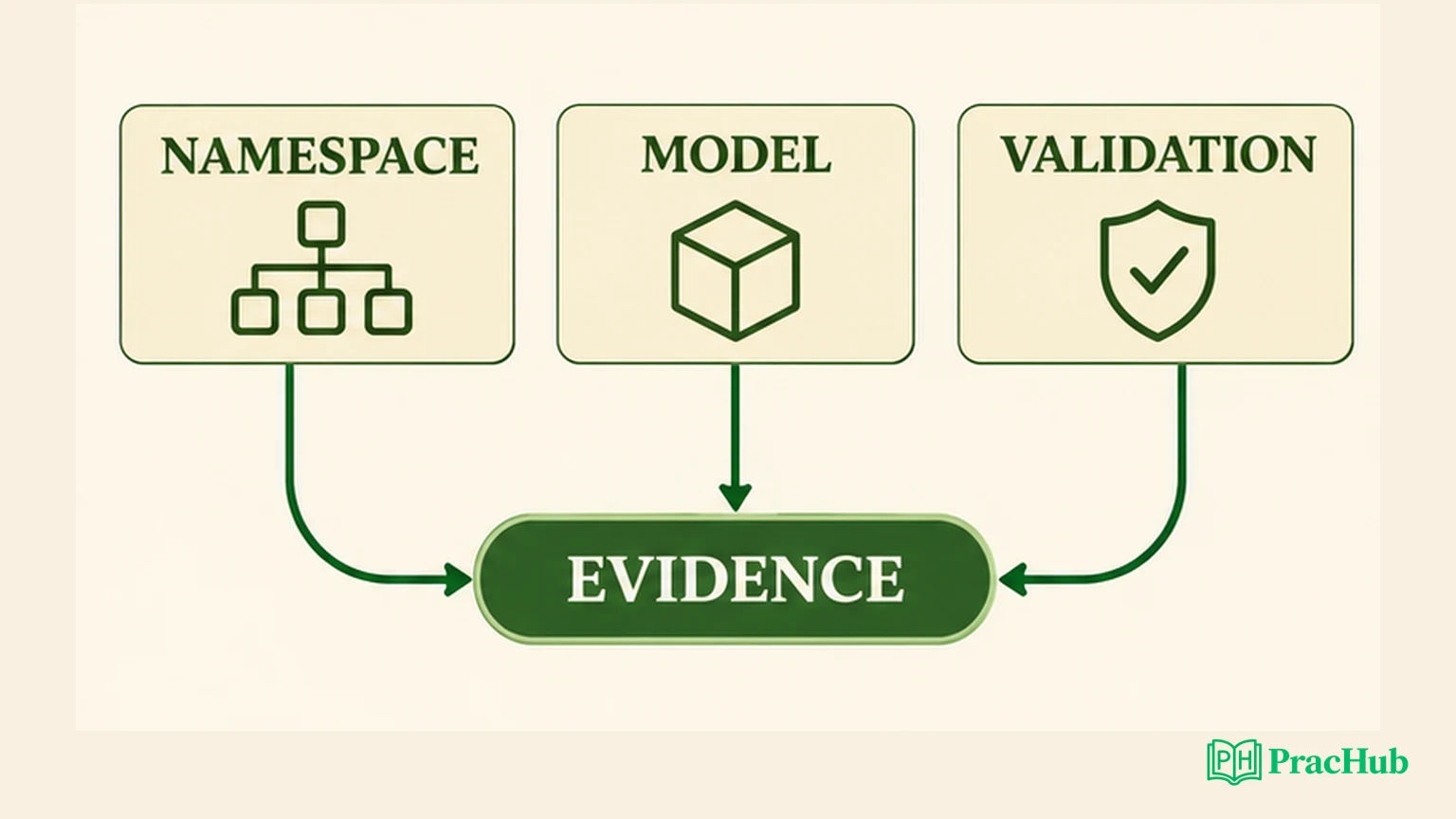
Distinguish parser, schema and business errors
Well-formed XML is the first boundary. A document with mismatched closing tags cannot be safely interpreted as the intended tree. A well-formed document can then fail the root or binding contract, or fail validation under the application's XSD. Finally, valid XML and a correctly bound Java object can still violate application rules, such as a business maximum or a requirement for an existing customer not expressible in the same schema. These are separate errors for both users and engineers.
| Test | What it proves |
|---|---|
| Markup broken before mapping begins | Parser or input acquisition failure |
| Correct local root name in the wrong URI | Identity mismatch, not a numeric constraint |
| Correct root with zero where a positive integer is required | Schema catches the intended content error |
| Schema-valid positive amount, but a synthetic business limit is exceeded | Application owns the later validation decision |
The error surfaced to a client should be appropriate for the service and include only necessary details. Keep a secure diagnostic record for authorized developers with the relevant input version, schema and trusted replay case. Avoid logging personal or payment data just to explain the first bad field. A test corpus of miniature synthetic XML documents can make the same problem reproducible. The fixture above deliberately uses no network resources or external XML sources.
Explain a safe version change
Suppose the producer introduces a new URI so consumers can recognize a new schema version. A consumer configured exclusively for the old namespace should not silently accept a document from the new one just because many field names match. Agree whether the service supports both contracts for a migration window. Include one document from each supported version, one explicit unsupported version and one valid document with an invalid business value. Record which context and schema processed each expected contract. A note that both files are XML is too broad to guide fallback behavior.
A further follow-up asks why a generated model works in one module and fails in another. Compare generated package names, source schema, target namespace, library versions and class identity loaded by each module. A valid JAXBContext may be initialized for the wrong version. An integration test should read from the same entry point that selects these models in production. A standalone constructor test can verify a class compiles while missing the version-routing issue.
Compare the generated binding with the document contract
Look up the target schema and inspect generated package settings or annotations for qualified elements. Capture a small synthetic replay and extract the root expanded name. If a service supports two generated contracts, set up separate fixtures bound to the correct context for each. A namespace line on a single Java field must be interpreted within the specific mapping arrangement. In an interview explain which artifact supplies the expected name rather than saying that JAXB guessed incorrectly.
If a producer supplies a qualified root and an unqualified child, choose a test whose outcome is documented by the schema. The two inputs can look identical in an editor that folds declarations. Print the QName of the child and compare with the form setting. Then adjust only the namespace in a synthetic copy and check whether the failure changes from missing or unexpected element to a content error. It shows which layer changed without asking you to modify any unrelated fields.
Verify that the service path really enables the same validation
For a service that reads files and HTTP requests, check whether both paths instantiate the same validation setup. A local helper can be stricter than the deployed entry point. Verify context creation, schema attachment and handler choices where the actual unmarshal occurs. Run the right-name/invalid-content input through the intended entry points in an authorized test. If one accepts it, investigate the configuration before rewriting the model annotation. Keep the allowed content types and version routing in the reproduction.
The tested fixture used Eclipse implementation 4.0.5 with a Jakarta API. Earlier libraries may use the Java package prefix javax.xml.bind. Check the platform and installed release, and don't attribute a class-loading issue to the namespace of an XML message. First record whether the code could create the JAXBContext; only after that can a specific input reproduce mapping or validation behavior.
Finally, confirm the boundary that the application returns to its caller. The root mismatch and the negative amount can both produce an unmarshal exception when validation stops. Your test can still identify the cause by controlling which input changed. A service error handler may choose to return the same category externally while keeping limited diagnostic detail internally. For a bug report, record the trusted fixture's UID, runtime version, mapping class and attached schema version. Preserve the expected and observed outcome for each case. An input that fails validation is useful only if you can also show a normal input from the same supported schema passes in that deployment.
Rehearse one fixture per boundary
| PracHub question | What to test or explain |
|---|---|
| Design a Streaming TLV Message Reassembler in C | Separate valid framing from schema or domain validity. |
| Implement a robust socket message reader | Test malformed payload handling as a distinct verification stage. |
| Design a packet reassembler API | Track when parsed identities become valid domain objects. |
| Defend a Project's Schema, Indexes, and Concurrency Model | Explain the difference between declared schema and actual object behavior. |
| Ensure Data Quality and Deliver Impact Amid Challenges | Build paired good and bad records to verify a parsing or validation fix. |
These questions address adjacent validation and parser reasoning. Start PracHub's data quality practice question with one document that changes only its prefix and another that changes the URI. Explain why a prefix change can still accept and why the different URI should fail in your fixture. Next set amount to zero without changing any namespace. The new rejection proves a different layer, and it is easier to explain once the binding has already passed the known-good case.
Comments (0)