What to expect
If you're interviewing for a Software Engineer role at Stripe, this guide walks you through every round you're likely to see, what each one is really testing, and how to prepare for the two rounds that trip people up the most. The short version: Stripe's loop is more practical than the puzzle-heavy interviews at many big tech companies. The emphasis is on production-minded engineering - writing correct code, debugging unfamiliar systems, integrating with APIs and documentation, and reasoning about what happens when things fail - not winning on obscure algorithm tricks.
The two most distinctive parts of the loop are the Bug Squash (debugging) round and the Integration round. Both are designed to feel like real day-to-day engineering work rather than a whiteboard exercise, and both reward calm, methodical reading over raw speed.
The process at a glance
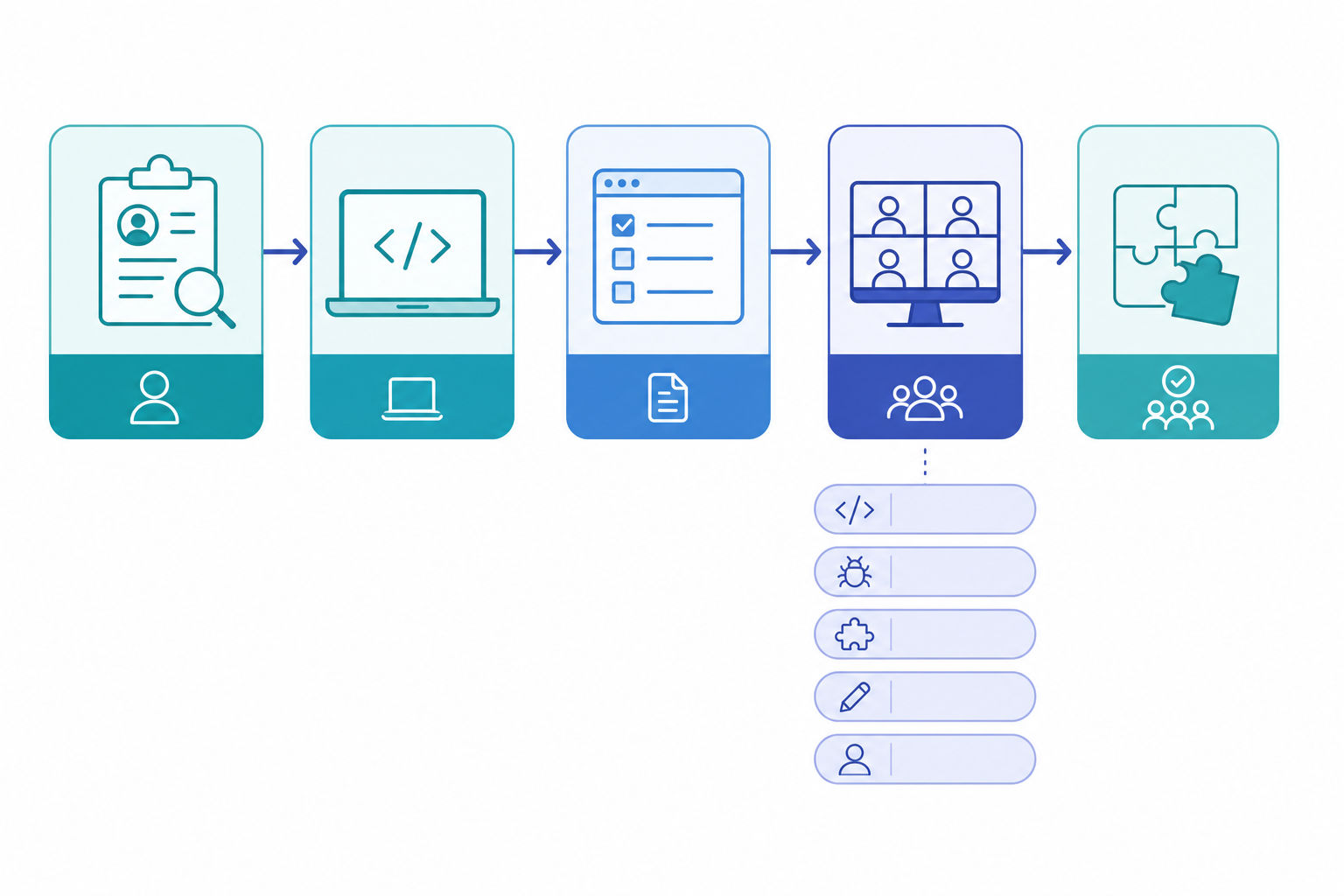
For most experienced candidates, the flow typically looks like this:
- Recruiter screen - role fit, motivation, and logistics
- Technical screen - a live coding interview
- Virtual onsite - usually 4 to 5 rounds drawn from the round types below
- Wrap-up - a hiring manager conversation, team matching, or hiring committee review
New grad and intern candidates sometimes see an online assessment before the technical screen. Exact round names and sequencing vary by team and level, so treat the structure below as the typical menu rather than a fixed script.
Interview rounds
The onsite is assembled from several round types. You won't necessarily see all of them - Stripe selects a subset (often 4 to 5) based on the role and team. Here's a quick map of what each round is for and how to spend your prep time.
| Round | Typical length | Primary signal | Where to focus prep |
|---|---|---|---|
| Recruiter screen | 30–45 min | Fit, motivation, logistics | Your "why Stripe / why payments" story |
| Online assessment (mostly new grad) | 60–90 min | Timed coding throughput | Parsing, data manipulation, business logic |
| Technical / coding screen | 45–60 min | Correctness, clarity, edge cases | Multi-part, real-world coding problems |
| Design + implementation | 60–120 min | End-to-end build quality | Interfaces, validation, error handling |
| System design | 45–60 min | Scalability, reliability tradeoffs | Idempotency, retries, ledgers, webhooks |
| Bug Squash / debugging | 45–60 min | Root-cause reasoning | Reading unfamiliar code, forming hypotheses |
| Integration | 45–60 min | Working with docs and APIs | Reading carefully, incremental validation |
| Refactoring / pairing | 45–60 min | Code-review judgment | Naming, structure, testability |
| Behavioral / hiring manager | 30–60 min | Ownership, judgment, communication | Concrete STAR stories |
Recruiter screen
Usually a 30 to 45 minute call focused on role fit, logistics, and motivation. Expect questions about why Stripe, why payments or financial infrastructure, the kinds of teams that interest you, and practical topics like location, level, and timeline. Recruiters often set the expectation that the process is practical and engineering-focused rather than LeetCode-style.
Online assessment
More common for new grad and intern candidates than for experienced hires. It's typically a 60 to 90 minute timed coding assessment covering one or more programming tasks, often with a business-logic or data-manipulation flavor. If you're an experienced candidate, don't assume you'll see this round.
Technical screen
A live coding interview (commonly 45 to 60 minutes) in a shared editor. It evaluates problem solving, code clarity, communication, and how you handle edge cases and follow-up constraints. Stripe often uses multi-part problems with a real-world feel - data processing, validation, business logic, or API-consistency scenarios. Problems tend to grow in stages: you solve a clean version, then the interviewer adds a wrinkle (a new input format, a failure case, a constraint) and watches how your code adapts.
Programming / coding round
An onsite live-coding round (commonly 45 to 60 minutes) with discussion throughout. You're evaluated on correctness, readability, iterative reasoning, testing instincts, and how clearly you explain tradeoffs as you work. Expect practical implementation: parsing, transformations, transactional logic, and edge cases around malformed input, retries, and exceptions.
Design and implementation round
This round often runs longer than a standard coding interview, commonly 60 to 120 minutes depending on the team. It combines requirement clarification, design, and actual implementation of part of a service, API, workflow, or component. Stripe uses it to see whether you can build something end-to-end with sensible interfaces, validation, error handling, and production realism - not just a sketch on a whiteboard.
System design round
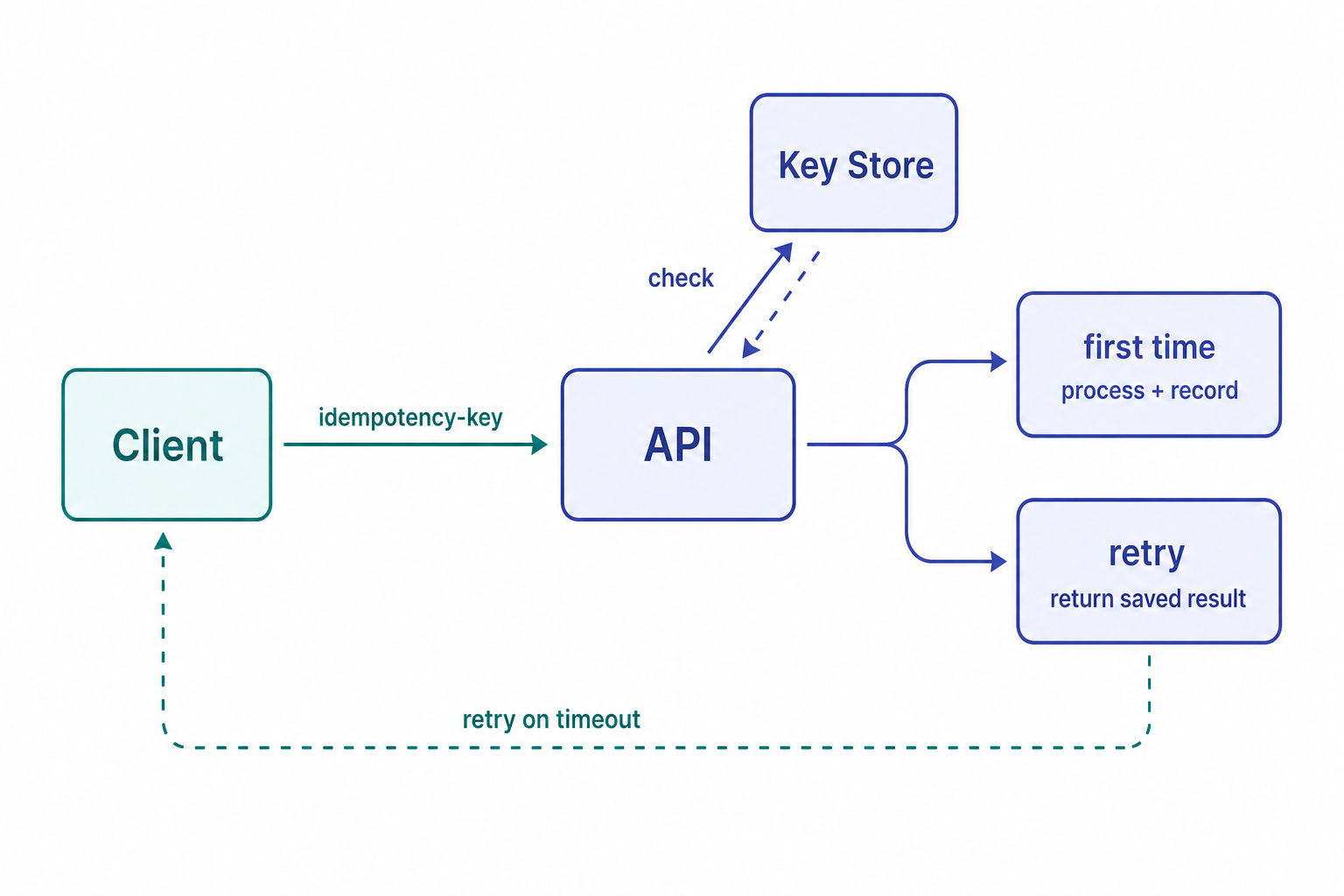
Some teams run a dedicated 45 to 60 minute system design interview; others fold design into the design-and-implementation round. The discussion evaluates scalability, reliability, consistency, failure handling, and operational tradeoffs. For backend and infrastructure roles, expect topics like ledgers, retries, recurring payments, webhooks, scheduling, and idempotent processing.
Bug Squash / debugging round
A debugging interview in an existing codebase or snippet that contains one or more defects. Stripe uses it to evaluate how you read unfamiliar code, form hypotheses, isolate root causes, and patch issues without thrashing. Many candidates find this one of the hardest rounds, because success depends on calm, methodical debugging rather than memorized patterns. The failure mode to avoid is "shotgun debugging" - changing several things at once and hoping the test passes.
Integration round
One of Stripe's signature exercises. You may need to read documentation, work with an unfamiliar API or tooling setup, parse responses, fix a broken integration, or reason through retries, auth, pagination, or errors. This round rewards careful reading and incremental validation far more than raw speed. Treat the docs as the source of truth and verify each assumption before moving on.
Refactoring / pair programming round
A collaborative round focused on improving existing code rather than writing from scratch - cleaning up structure, improving naming, reducing duplication, or discussing better abstractions and testing. It isn't universal, but it appears often enough to be worth preparing for code review and maintainability discussions.
Behavioral / hiring manager round
This conversation can happen during or after the onsite and usually lasts 30 to 60 minutes. It assesses ownership, teamwork, judgment, communication, user empathy, and a learning mindset. Stripe places real weight here, so expect concrete questions about mistakes, handling criticism, cross-functional work, and decisions that affected users or system reliability.
What they test
Stripe evaluates core software engineering fundamentals, almost always in practical forms.
- Coding fundamentals - arrays, hash maps, sorting, parsing, and transformations, with occasional graph or search basics when relevant. The dominant pattern, though, is business-logic-heavy implementation rather than pure algorithms.
- Robustness over "does it work" - interviewers push on whether your code validates inputs, handles malformed or partial data, covers edge cases, and stays readable as requirements change.
- API and systems thinking - API design, data modeling, SQL and persistence tradeoffs, concurrency, race conditions, debugging, and testing strategy.
- Reliability and correctness - for backend and infrastructure roles especially, system design centers on idempotency, retries, backoff, event ordering, failure recovery, consistency, observability, and operational simplicity.
Stripe's payments domain surfaces even in general SWE interviews, so be comfortable discussing webhooks, request validation, state transitions, retry-safe processing, and what happens when an external system fails or returns unexpected data.
The recurring theme: Stripe wants production-minded engineers, not just strong interview solvers. Be ready to explain tradeoffs, justify why you chose a simpler design over a clever one, and work through ambiguity without losing rigor. Reading documentation carefully, integrating with unfamiliar systems, and debugging existing code matter more here than in most engineering loops.
You can pressure-test these skills on real, recently-asked prompts in the Stripe question bank, and broaden your reps across the full interview question bank.
How to prepare and stand out
- Clarify requirements before you code - especially around malformed input, retries, state transitions, and failure behavior. Interviewers notice whether you think about correctness upfront.
- Narrate your reasoning during coding and debugging rounds so the interviewer can follow your judgment, not just your final code.
- In Bug Squash, resist patching immediately. Read the code carefully, form a hypothesis, and explain the likely root cause before changing anything.
- In the Integration round, use the docs methodically. Verify assumptions step by step instead of guessing how an API or tool behaves.
- Treat every coding problem like production work - mention validation, tests, exception handling, and how your solution behaves under partial or bad data.
- Keep designs simple and operationally safe. Stripe rewards clean interfaces, idempotency, and reliability over over-engineered complexity.
- In behavioral answers, show ownership and intellectual honesty - concrete examples of what you learned from mistakes, especially where reliability, users, or cross-functional coordination were involved.
A debugging method that works under pressure
The Bug Squash round is less about knowing tricks and more about following a disciplined loop instead of flailing. A method many strong candidates use:
- Reproduce first. Run the failing case and read the actual error or wrong output before touching anything.
- Read the code, narrate the intent. Say out loud what each part is supposed to do - gaps between intent and behavior are where bugs hide.
- Form one hypothesis. State what you think is wrong and why before you change a line.
- Make one change, then re-test. Change a single thing so you know whether it fixed the bug. Resist batching fixes.
- Confirm with an edge case. Once it passes, add an input that would catch a regression.
For instance, if a function that splits transactions by currency drops some records, the calm move is to log the input grouping and confirm whether the bug is in parsing, grouping, or the final sum - rather than rewriting the whole function and hoping.
Do this, not that
| Common mistake | What strong candidates do instead |
|---|---|
| Jump straight to coding | Restate the problem and name the edge cases first |
| Assume the happy path | Ask what happens on bad input, timeouts, and retries |
| Patch the bug you guess at | Reproduce, hypothesize, then change one thing |
| Guess how the API behaves | Read the docs and verify each call's response |
| Optimize prematurely | Get it correct and readable, then discuss tradeoffs |
| Give a vague behavioral story | Use a concrete situation, your actions, and the result |
Structuring behavioral answers
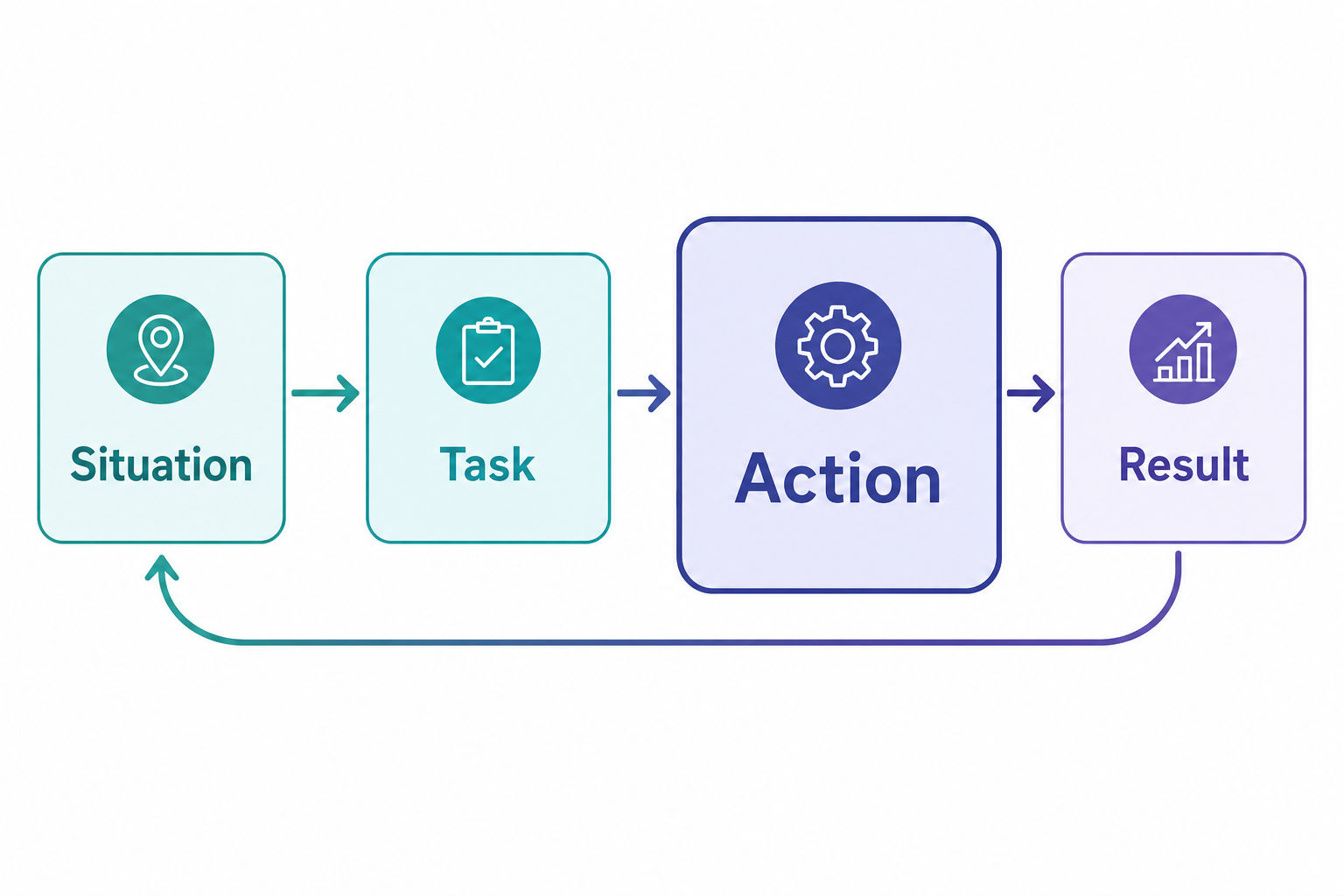
A simple, reliable frame for the behavioral round is STAR - Situation, Task, Action, Result. Keep the Situation short, spend most of your time on the Action (what you specifically did), and always close with a Result and what you learned. Stripe weighs ownership heavily, so pick stories where you drove an outcome rather than watched one happen.
A focused two-week prep plan
You don't need months of grinding, but you do need to practice the kinds of problems Stripe asks. One workable split:
- Days 1–4: Drill practical coding - parsing, data transformation, and business logic. After each problem, add validation and edge-case handling as if it were going to production.
- Days 5–7: Practice debugging. Take working code, intentionally break it, and fix it using the reproduce-hypothesize-change loop. Get comfortable reading code you didn't write.
- Days 8–10: Do an integration-style exercise. Pick an unfamiliar public API, read its docs, and build a small client that handles auth, pagination, and errors correctly.
- Days 11–12: Review system design fundamentals with a payments lens - idempotency, retries, webhooks, and consistency.
- Days 13–14: Prepare 5 to 7 behavioral stories in STAR form and do a timed mock for the role you're targeting.
Match your reps to the level you're applying for by browsing the Software Engineer question set, and bookmark more interview guides for the other companies in your search.
How to Use This Page as a Prep Plan
Do not treat this as passive reading. Convert the ideas in this page into a short weekly loop: learn one idea, practice it under interview conditions, then write down what changed. That is the fastest way to turn advice into visible interview behavior.
| Prep area | What you need to prove | Practice artifact |
|---|---|---|
| Understand | Turn the prompt into a concrete goal. | Clarifying questions and success criteria. |
| Practice | Use realistic constraints and timed reps. | Worked examples with edge cases. |
| Explain | Make reasoning visible. | Tradeoffs, assumptions, and test strategy. |
| Improve | Review misses quickly. | A short feedback log and next action. |
For Stripe Software Engineer Interview Guide 2026, the strongest candidates usually do three things well: they make their assumptions explicit, they use concrete examples instead of vague claims, and they review mistakes quickly enough that the next practice rep is better than the last one.
Video Walkthrough
Scortier walks through the Stripe Software Engineer loop first-hand. It is one candidate's account rather than an official spec, so treat the round order as indicative.
FAQ
Is Stripe's coding interview LeetCode-style?
Less than at many big tech companies. Stripe leans toward practical, business-logic-heavy problems - parsing, validation, transformations, and multi-part real-world scenarios - rather than pure algorithm puzzles. Solid data-structure fundamentals still help, but raw LeetCode grinding is rarely enough on its own. Prioritize correctness, edge cases, and clean code.
What is the Bug Squash round and how do I prepare?
It's a debugging interview where you fix defects in existing code you didn't write. Prepare by practicing on unfamiliar codebases: reproduce the failure, read the code and narrate its intent, form a single hypothesis, change one thing, and re-test. The signal is methodical root-cause reasoning, not how fast you can patch.
How important is the behavioral round at Stripe?
It carries real weight. Stripe assesses ownership, judgment, communication, and how you handle mistakes and feedback. Come with concrete STAR-structured stories, ideally ones involving reliability, users, or cross-functional work, and be honest about what went wrong and what you learned.
What should I do in the Integration round?
Treat the documentation as the source of truth. Read carefully, verify each assumption with a small test before moving on, and reason explicitly about auth, pagination, retries, and error responses. Careful, incremental validation beats guessing how an API behaves.
How long is the full Stripe SWE interview process?
It varies by team, level, and scheduling, so there's no single fixed timeline. A common shape is a recruiter screen, a technical screen, then a virtual onsite of roughly four to five rounds, followed by a wrap-up or hiring-committee step. Ask your recruiter for the specific sequence and expected timing for your role.
Which languages can I use?
Stripe's coding and debugging rounds are generally language-agnostic - use a language you're genuinely fluent in, since you'll be reading and editing code under time pressure. Confirm specifics with your recruiter, and prioritize fluency over picking a language you think looks impressive.